What is the shielding principle of the M series circular connectors?
- Share
- Issue Time
- Oct 16,2026
Summary
In modern industrial automation, reliable electrical connections are essential for accurate signal transmission, stable communication, and equipment performance. Motors, variable-frequency drives, switching power supplies, and industrial communication systems can generate electromagnetic interference (EMI), potentially affecting sensitive electrical signals.
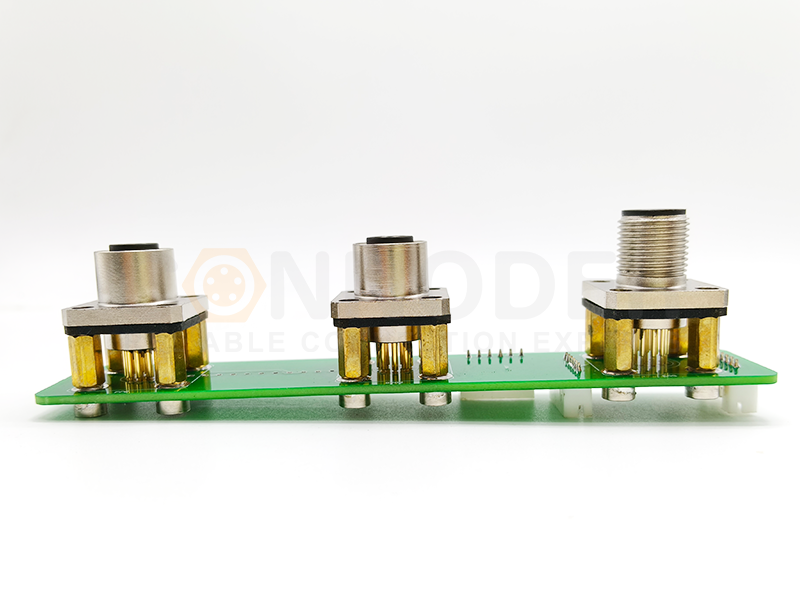
Introduction
In modern industrial automation, reliable electrical connections are essential for accurate signal transmission, stable communication, and equipment performance. Motors, variable-frequency drives, switching power supplies, and industrial communication systems can generate electromagnetic interference (EMI), potentially affecting sensitive electrical signals. Understanding the shielding principle of the connector helps engineers select suitable circular connectors for demanding industrial environments.
What Is the Shielding Principle of the Connector?
How Does Shielding Work in M Series Circular Connectors?
Shielded vs. Unshielded M Series Circular Connectors
| Feature | Shielded Connector | Unshielded Connector |
|---|---|---|
| Shield construction | Designed with a conductive shielding path | Does not provide a complete connector shield path |
| EMI protection | Can reduce electromagnetic coupling when correctly implemented | Generally offers less shielding against external EMI |
| Signal integrity | Can improve noise immunity in suitable applications | May be sufficient in low-noise environments |
| Installation | Requires appropriate shield termination and bonding | Often simpler when no shield connection is required |
| Cost and complexity | May involve additional components and assembly steps | Often more economical |
| Typical applications | Industrial Ethernet, noise-sensitive signals, electrically noisy environments | Basic sensors, simple I/O, and applications without stringent shielding requirements |
What Factors Affect Connector Shielding Effectiveness?
How to Select the Right Shielded Circular Connector
Conclusion