What are the core differences among M8, M12, M9 and M5 circular connectors in the product system?
- Share
- Issue Time
- Feb 2,2026
Summary
In modern industrial automation and equipment design, understanding the core differences of M8, M12, M9 and M5 circular connectors is essential for building reliable, scalable, and cost-effective systems. These M-series connectors are defined by IEC metric standards and form a complete product system rather than isolated product choices.
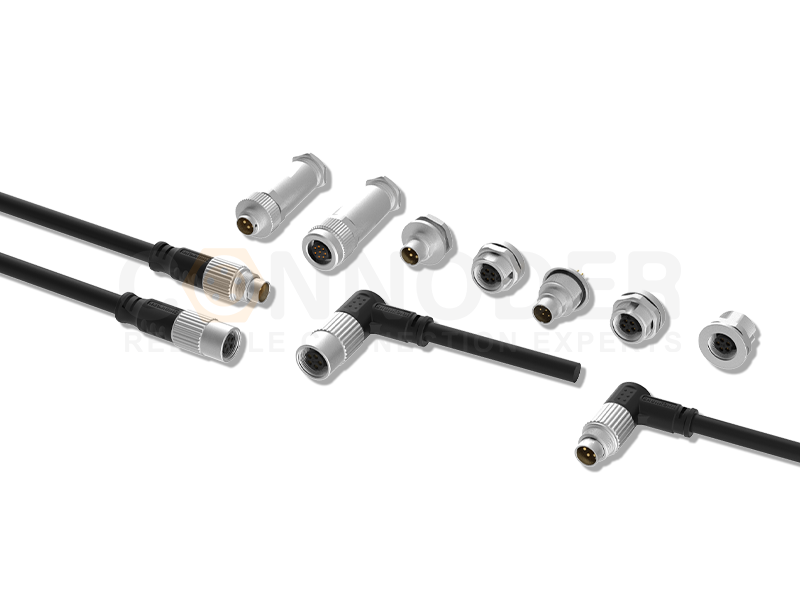
What are the core differences among M8, M12, M9 and M5 circular connectors in the product system?
Introduction
In modern industrial automation and equipment design, understanding the core differences of M8, M12, M9 and M5 circular connectors is essential for building reliable, scalable, and cost-effective systems. These M-series connectors are defined by IEC metric standards and form a complete product system rather than isolated product choices.
Circular Connectors
Rugged, compact and versatile — ideal when you need mixed power & signal plus environmental protection.
Core Differences at a System Level
When evaluated from a product system perspective, the core differences among M5 circular connectors, M8 circular connectors, M9 circular connectors, and M12 circular connectors can be summarized by four key dimensions:
Mechanical size and robustness
Electrical capacity (current and voltage)
Pin count and signal density
Application positioning within industrial systems
M5 Circular Connectors – Designed for Miniaturization
M5 circular connectors are the smallest members of the M-series family. They are optimized for applications where installation space is extremely limited and only low signal or low power transmission is required.
Very compact footprint
Typically 3–4 pins
Ideal for miniature sensors and electronics
M8 Circular Connectors – The Standard Sensor Solution
M8 connectors are widely used in industrial automation, especially at the sensor and actuator level. Compared with M5, they offer improved mechanical strength and higher electrical capacity.
Compact but robust design
3–8 pin configurations
Common in proximity sensors and I/O systems
M9 Circular Connectors – Bridging M8 and M12
M9 circular connectors fill the gap between M8 and M12 within the product system. They provide higher electrical performance than M8 while maintaining a more compact size than M12.
Balanced size and performance
Higher pin density than M8
Suitable for compact industrial equipment
M12 Circular Connectors – The Industrial Backbone
M12 connectors are the most versatile and widely adopted connectors in industrial environments. They support power, signal, and high-speed data transmission, including Industrial Ethernet.
High mechanical durability
Wide range of coding types (A, D, X, etc.)
Used in automation networks, robotics, and machinery
Why Connoder Is a Trusted M-Series Connector Partner
According to the Connoder company profile, Connoder focuses on delivering reliable and application-driven interconnection solutions for industrial markets. With a complete portfolio covering M5, M8, M9, and M12 circular connectors, Connoder supports customers throughout the entire product lifecycle.
Comprehensive M-series connector range
Strict quality control and testing standards
Flexible customization for OEM and system integrators
Long-term supply stability
By understanding the core differences among M8, M12, M9 and M5 circular connectors, engineers and buyers can make better decisions that improve system reliability and long-term performance—while partnering with Connoder for dependable connector solutions.
What are the core differences among M8, M12, M9 and M5 circular connectors?
The core differences among M5, M8, M9 and M12 mainly lie in dimensions, mechanical strength, electrical performance and application positioning. M5 is suitable for micro - signal connections. M8 is commonly used in industrial sensors. M9, which is between M8 and M12, is suitable for high - performance applications with limited space. M12 supports high current, high - speed data and industrial networks.
What factors should be considered when choosing M - series circular connectors?
Five main aspects should be considered: installation space, required current and voltage, number of pins and signal density, environmental protection level (such as IP67), and future system expandability. Selecting M5, M8, M9 or M12 according to different applications can ensure long - term reliability and performance optimization.
What are the advantages of Connoder's M - series connectors?
Connoder offers a complete product line of M5, M8, M9 and M12. It has strict quality control, flexible customization capabilities and long - term supply stability. The company focuses on industrial automation applications and can help customers choose the most suitable connector solutions. For more information, visit the introduction of Connoder.
What application scenarios is the M9 connector suitable for?
The M9 connector, which is between M8 and M12, is suitable for industrial equipment with limited space but requiring high performance or more pins. It is often used in compact industrial automation modules or special sensor systems.
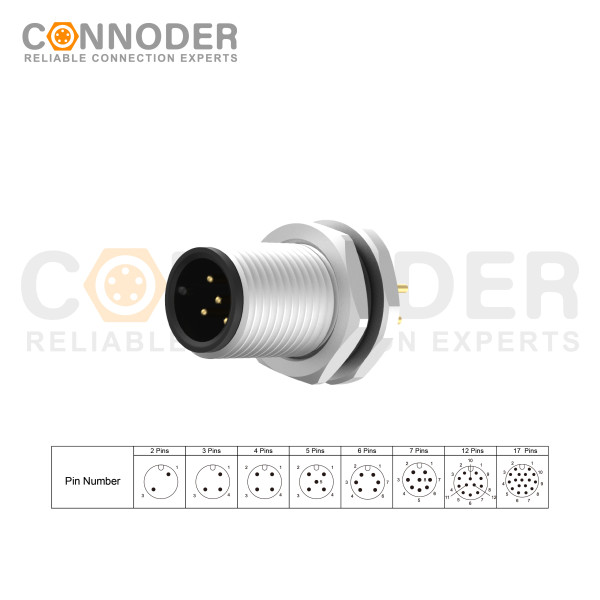
The M12 A 5 Pin Circular Connector is a standard connector widely used in the field of industrial automation.
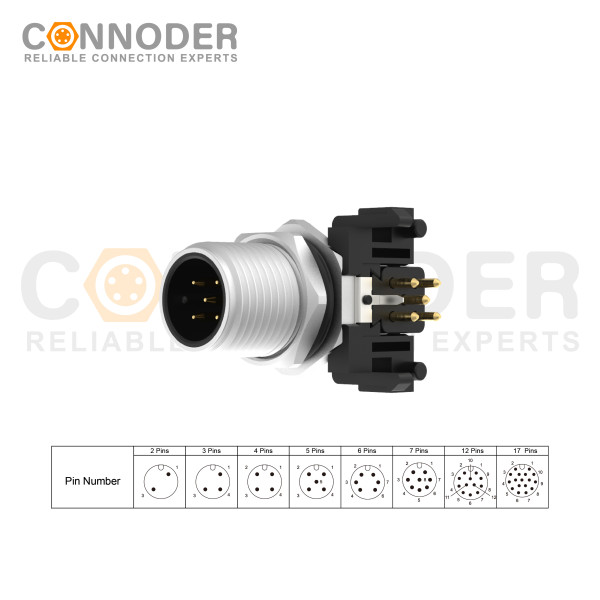
M12 A 5 Pin Circular Connector is a versatile and robust connector designed for industrial applications.
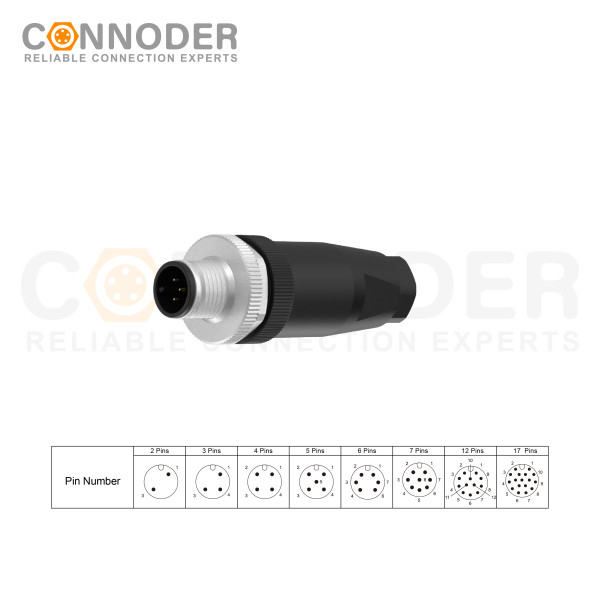
M12 A 5 Pin Circular Connector is a flexible and highly customizable connector suitable for a variety of industrial applications.
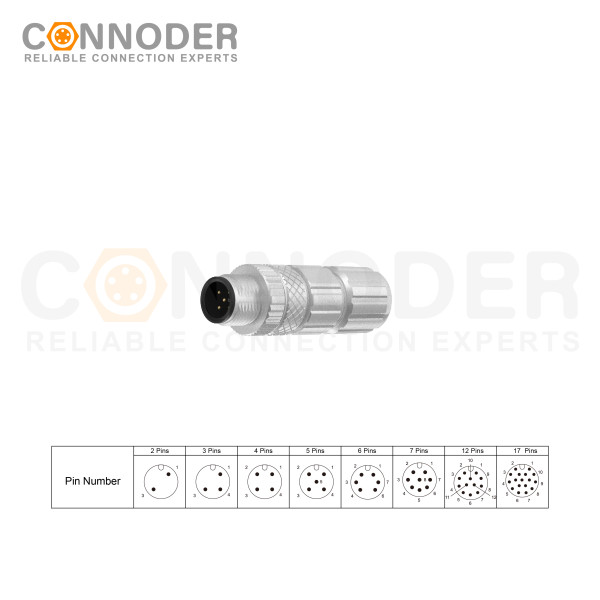
M12 A 5 Pin Circular Connector is a flexible and highly customizable connector suitable for a variety of industrial applications.