Three common locking methods for circular connectors
- Share
- Issue Time
- Apr 8,2026
Summary
In modern industrial connectivity, selecting the right locking method of circular connectors is essential for ensuring stable signal transmission, mechanical reliability, and environmental protection. Circular connectors are widely used in automation, energy, transportation, and medical industries, where durability and secure connections are critical.
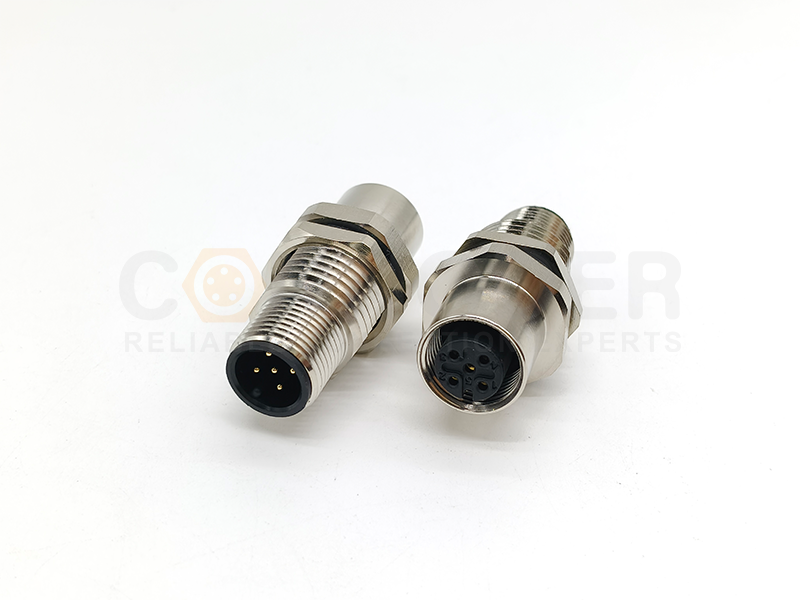
Three common locking methods for circular connectors
Introduction
In modern industrial connectivity, selecting the right locking method of circular connectors is essential for ensuring stable signal transmission, mechanical reliability, and environmental protection. Circular connectors are widely used in automation, energy, transportation, and medical industries, where durability and secure connections are critical.
Among all available designs, the three common locking methods for circular connectors—threaded, bayonet, and push-pull—are the most widely used due to their balanced performance, usability, and reliability.
Circular Connectors
Rugged, compact and versatile — ideal when you need mixed power & signal plus environmental protection.
Why Locking Mechanisms Are Important
The locking mechanism determines how securely a connector maintains electrical contact under real-world conditions. A well-designed locking system ensures:
Resistance to vibration and mechanical shock
Prevention of accidental disconnection
Reliable sealing for harsh environments (IP67/IP68)
Ease of installation and maintenance
Three Common Locking Methods for Circular Connectors
1. Threaded Locking (Screw Coupling)
Threaded locking is one of the most traditional and reliable methods. It uses a rotating coupling nut to tightly secure the connector, making it ideal for demanding environments.
Advantages:
Excellent vibration resistance
Strong mechanical retention
High sealing performance
Disadvantages:
Slower connection process
Requires more installation effort
2. Bayonet Locking (Quick Twist Lock)
Bayonet locking uses a push-and-twist mechanism, typically requiring only a quarter turn to lock the connector securely. It provides a balance between speed and reliability.
Advantages:
Fast connection and disconnection
Good vibration resistance
Suitable for frequent use
Disadvantages:
Slightly lower retention strength than threaded locking
3. Push-Pull Locking (Quick Release Mechanism)
Push-pull connectors feature a spring-loaded locking system that automatically locks when pushed in and releases when pulled. This design is highly efficient and user-friendly.
Advantages:
One-hand operation
Fast connection and disconnection
Compact design
Disadvantages:
Higher cost
More complex structure
How to Choose the Right Locking Method
High vibration: Use threaded locking
Fast operation: Choose bayonet or push-pull
Compact design: Push-pull is ideal
Harsh environments: Threaded with sealing is best
About CONNODER
CONNODER is a professional circular connector manufacturer specializing in high-performance connectivity solutions for industrial applications. With strong R&D capabilities and strict quality control, we provide reliable products for automation, energy, and harsh environments.
IP67/IP68 waterproof connectors
M5, M8, M12 circular connectors
Custom OEM/ODM solutions
Advanced locking mechanism design
Conclusion
Understanding the locking method of circular connectors is key to ensuring reliable performance. The three common locking methods—threaded, bayonet, and push-pull—each offer unique advantages depending on your application.
By choosing the right solution and partnering with a trusted manufacturer like CONNODER, you can ensure long-term stability, safety, and efficiency.
What are the three common locking methods for circular connectors?
The three most common locking methods for circular connectors are threaded locking, bayonet locking, and push-pull locking.
Threaded locking offers the strongest and most secure connection
Bayonet locking provides quick quarter-turn engagement
Push-pull locking enables fast, one-handed operation
Which locking method is best for high-vibration environments?
Threaded locking is the best choice for high-vibration environments because it provides strong mechanical retention and prevents loosening under shock and continuous movement. It is widely used in industrial automation and heavy machinery.
What is the difference between bayonet and threaded locking connectors?
The main difference lies in connection speed and strength:
Threaded locking: stronger, more secure, but slower to connect
Bayonet locking: faster (quarter-turn), easier to use, but slightly less secure
Where are push-pull circular connectors commonly used?
Push-pull connectors are commonly used in medical devices, testing equipment, and high-end electronics because they allow quick, tool-free connection and disconnection with high convenience and precision.
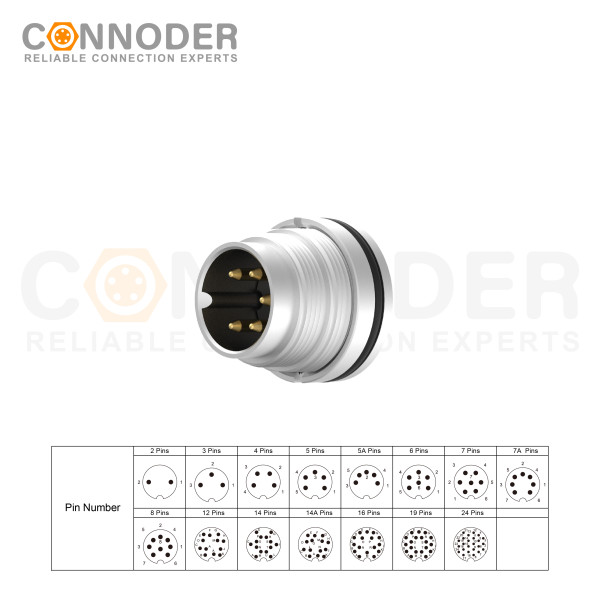
M16 6 Pin Circular Connector A-Code Interface, Waterproof Connector Receptacle Cable, Straight, Front-Locking, Unshielded
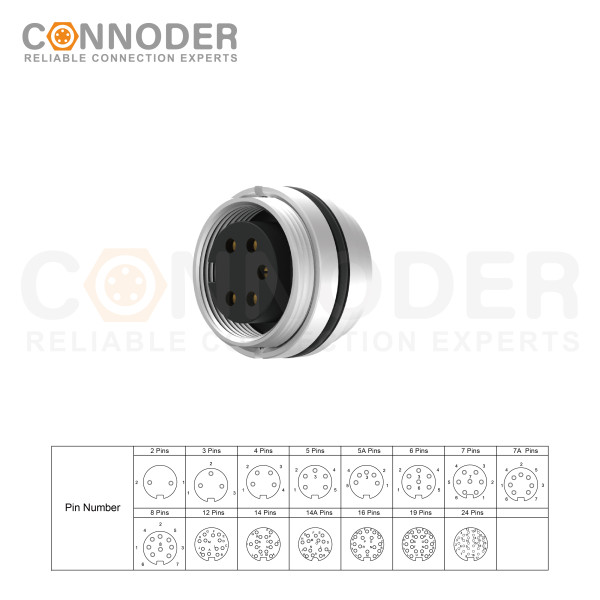
M16 6 Pin Circular Connector assemblies are ideal for demanding industrial applications such as industrial automation and aerospace, marine, and telecom systems.
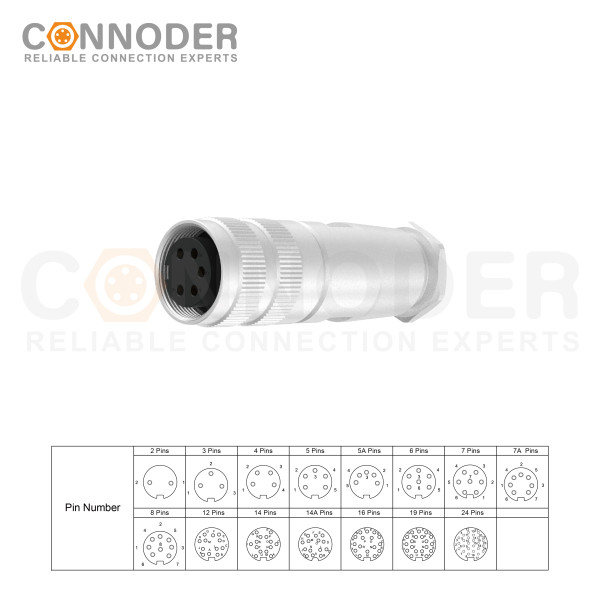
M16 6 Pin Circular Connector are ideal for demanding industrial applications such as industrial automation and aerospace, marine, and telecom systems. M16 Circular Connector are available in quick-lock wiring assembly types with IP67 protection and a vibration-resistant screw design.
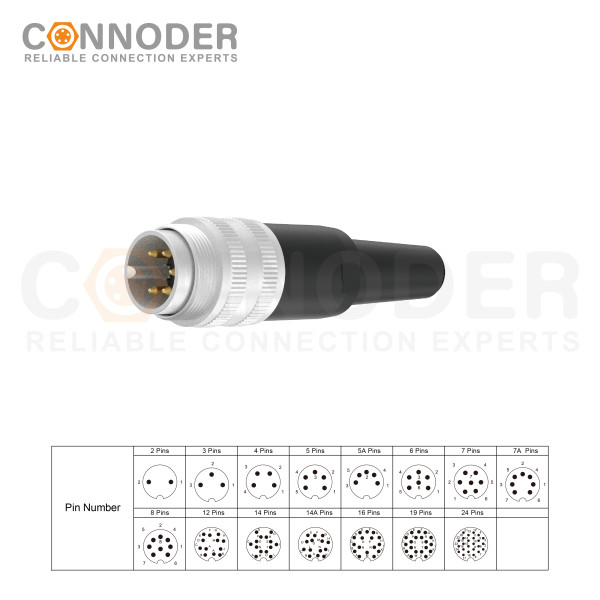
M16 6 Pin Circular Connector are ideal for demanding industrial applications such as industrial automation and aerospace, marine, and telecom systems. M16 Sensor connector are available in quick-lock wiring assembly types with IP67 protection and a vibration-resistant screw design.