PG7 VS PG9 VS PG13.5 Cable Joints: How to Choose the Appropriate Size
- Share
- Issue Time
- Oct 12,2026
Summary
Among common PG cable gland sizes, PG7, PG9, and PG13.5 are frequently considered for small and medium cable-entry applications. However, choosing the correct option requires more than comparing the numbers. You need to understand the cable's actual outside diameter, the gland's clamping range, and the thread dimensions required by the enclosure.
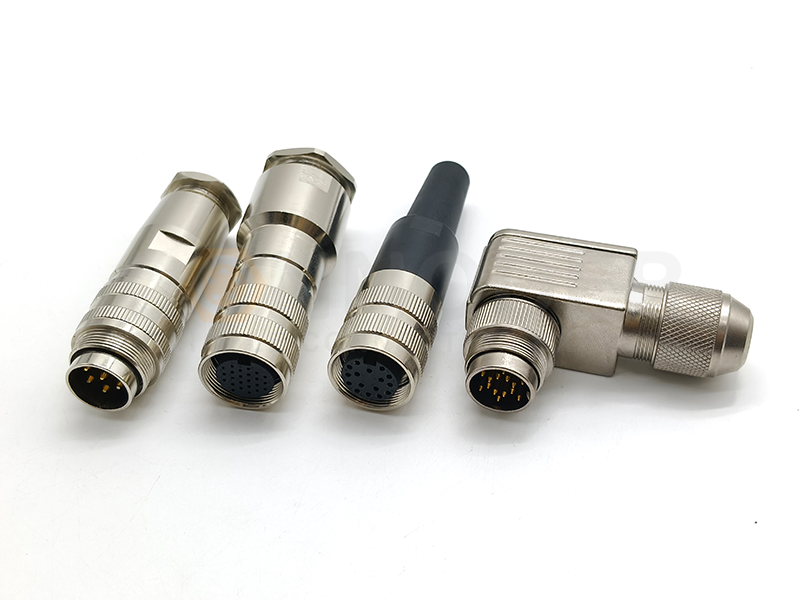
PG7 VS PG9 VS PG13.5 Cable Joints: How to Choose the Appropriate Size
Introduction
Among common PG cable gland sizes, PG7, PG9, and PG13.5 are frequently considered for small and medium cable-entry applications. However, choosing the correct option requires more than comparing the numbers. You need to understand the cable's actual outside diameter, the gland's clamping range, and the thread dimensions required by the enclosure.
This guide explains the differences between PG7, PG9, and PG13.5 cable glands, provides a practical comparison chart, and outlines a step-by-step selection method. It also explores how reliable industrial connectivity components support the performance of modern automation systems.
Circular Connectors
Rugged, compact and versatile — ideal when you need mixed power & signal plus environmental protection.
PG7 vs PG9 vs PG13.5: Cable Size Comparison Chart
A comparison chart is a useful starting point when choosing a cable gland. The most important information includes the cable clamping range, thread outer diameter, and compatibility with the enclosure.
| Specification | PG7 | PG9 | PG13.5 |
|---|---|---|---|
| Approximate thread outer diameter | 12.5 mm | 15.2 mm | 20.4 mm |
| Example cable OD range | 3‑6.5 mm | 4‑8 mm | 6‑12 mm |
| Relative mounting size | Small | Medium | Large |
| Typical application | Sensor and instrumentation wiring | Industrial control wiring | Larger cable entries |
Technical note: These are general reference figures, not universal specifications. Cable diameter ranges vary by manufacturer, sealing insert design, and product model. Always verify the exact product datasheet before selection.
How to Interpret the Comparison
PG7: Consider this size when working with a small cable and a compact enclosure opening.
PG9: Consider this size when the cable falls within the specified clamping range and the mounting thread matches the enclosure.
PG13.5: Consider this size when a larger cable entry is needed and the gland's dimensions and clamping range are suitable.
These recommendations are starting points, not universal rules. A PG9 gland from one manufacturer may have a different cable range from another PG9 model.
It is also important to distinguish the cable's outside diameter from its conductor cross-section. A cable with several small conductors may still have a relatively large outside diameter because of insulation, shielding, and its outer jacket.
How to Choose the Appropriate PG Cable Gland Size
The most reliable approach is to follow a measurement-based selection process rather than choosing a gland by appearance or nominal size alone.
Step 1: Measure the Cable's Outside Diameter
Use a digital caliper to measure the outside diameter of the finished cable. Include the outer jacket and any relevant shielding or armour according to the gland manufacturer's instructions.
Measure at several points along the cable.
Avoid compressing a soft cable jacket.
Record any significant variations in cable diameter.
Check the maximum relevant diameter against the product's permitted range.
Do not use the conductor cross-section, such as 0.5 mm² or 0.75 mm², as a substitute for the cable's outside diameter.
Step 2: Match the Measurement to the Clamping Range
Compare the measured cable diameter with the range listed in the gland's datasheet.
For example, if a particular PG9 gland is rated for a cable OD of 4–8 mm, a cable measuring 6 mm falls within the specified range. If the cable is close to the upper or lower limit, confirm the manufacturer's guidance before making a selection.
Step 3: Check Thread and Mounting Compatibility
The gland must fit both the cable and the enclosure. Before ordering, verify the thread designation and pitch, thread outer diameter, required mounting-hole dimensions, panel thickness, and available clearance.
PG and metric threads should not be assumed interchangeable simply because their diameters appear similar.
Step 4: Evaluate Environmental Conditions
Consider exposure to moisture, dust, oil, chemicals, temperature changes, vibration, and mechanical loads. Select the material, sealing design, and ingress protection rating according to the actual operating conditions.
An IP rating should be verified against the product documentation and specified installation conditions rather than assumed from the product description.
Step 5: Verify the Complete Assembly
Before purchasing in quantity, confirm compatibility among the cable, gland, sealing components, enclosure, and installation method. For critical applications, verify the assembled cable entry through the appropriate inspection and testing procedures.
Common Applications of PG7, PG9, and PG13.5
Different cable-entry applications have different space, sealing, and mechanical requirements. The appropriate gland should be selected according to the cable and the installation rather than the application label alone.
PG7 for Compact Sensor and Instrumentation Cables
PG7 may be suitable for small cable entries in compact sensors, instrumentation equipment, and electrical housings. Its relatively small mounting size can be useful when enclosure space is limited. The selected gland must still provide sufficient cable retention and the required environmental protection.
PG9 for Industrial Control Panels
PG9 may be appropriate for certain control cables entering junction boxes, industrial machinery, and electrical control cabinets. When cables are exposed to vibration or frequent movement, verify the gland's strain-relief performance and follow the installation instructions.
PG13.5 for Larger Cable Entries
PG13.5 may be suitable for larger cable entries in electrical enclosures and industrial equipment. Confirm the cable's outside diameter, the enclosure opening, available mounting space, and required sealing performance before selecting it.
How Reliable Industrial Connectivity Supports Equipment Performance
Cable-entry components are only one part of a reliable industrial electrical system. The performance of the overall installation also depends on connector compatibility, cable construction, mechanical design, environmental protection, and manufacturing quality.
CONNODER is an industrial connectivity manufacturer established in Dongguan, China, in 2013. According to its official company introduction, the company develops and manufactures industrial circular connectors, cables, and related components.
Its product portfolio includes M5, M8, M9, M12, M16, and 7/8-inch circular connectors. Its stated capabilities include product development, tooling, precision stamping, injection molding, and automated assembly.
For equipment manufacturers and industrial buyers, these capabilities can be relevant when developing sensor connections, automation equipment, control systems, and custom cable assemblies.
Connector compatibility: Select the appropriate connector series and configuration for the application.
Cable specifications: Verify cable dimensions, jacket material, electrical requirements, and installation conditions.
Customization requirements: Identify required cable lengths, connector configurations, and project-specific needs.
Quality documentation: Review applicable product specifications, inspection requirements, and supporting quality records.
Complete-system compatibility: Ensure connectors, cables, cable-entry fittings, and enclosures work together as intended.
For projects involving PG7, PG9, or PG13.5 cable glands, confirm the gland's availability and technical specifications with the relevant gland supplier. Do not assume that a circular connector manufacturer necessarily supplies every type of cable gland.
Conclusion
Choosing the correct size for PG7, PG9, and PG13.5 cable glands starts with accurate cable measurement and a clear understanding of thread compatibility. By checking the cable's outside diameter, verifying the specified clamping range, and considering the installation environment, engineers and buyers can make more reliable component selections.
PG7 may suit compact cable entries, PG9 may work for certain general control applications, and PG13.5 may accommodate larger cable entries when its specifications match the application. Always confirm the exact product data before making a final selection.
Reliable industrial connectivity also requires suitable connectors, cables, and compatible installation components. CONNODER develops industrial circular connectors and cable-related solutions for a range of applications.
What cable diameter fits a PG7 cable gland?
A PG7 cable gland may accommodate cables with an outside diameter of approximately 3–6.5 mm. However, the actual clamping range varies by manufacturer and product design. Always check the specific product datasheet before selecting a gland.
What is the cable diameter range for a PG9 cable gland?
Some PG9 cable glands support cable outside diameters of approximately 4–8 mm. To ensure proper cable retention and sealing, measure the finished cable and compare it with the manufacturer's specified clamping range.
What is the difference between PG9 and PG13.5 cable glands?
PG13.5 has a larger mounting thread than PG9 and may be suitable for larger cable entries. Some PG13.5 models support cable diameters of approximately 6–12 mm, compared with approximately 4–8 mm for some PG9 models. Actual specifications depend on the product.
How do I choose the correct PG cable gland size?
Measure the cable's outside diameter with a caliper, select a gland whose specified clamping range covers that measurement, and verify thread compatibility with the enclosure. Also consider the required ingress protection, operating environment, and installation conditions.
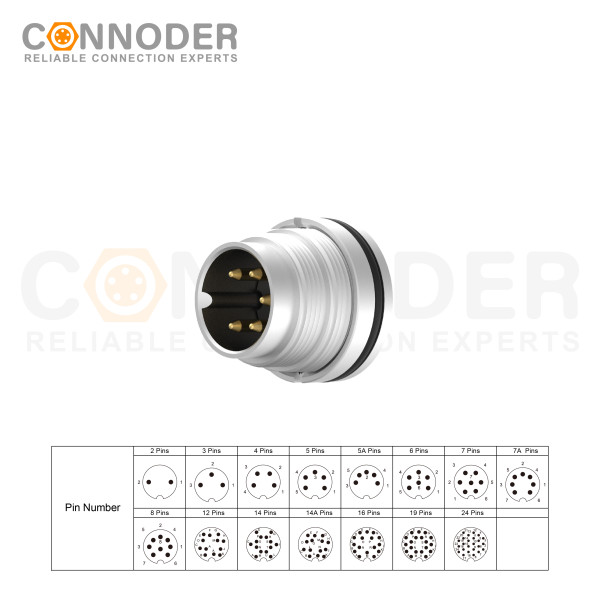
M16 6 Pin Circular Connector A-Code Interface, Waterproof Connector Receptacle Cable, Straight, Front-Locking, Unshielded
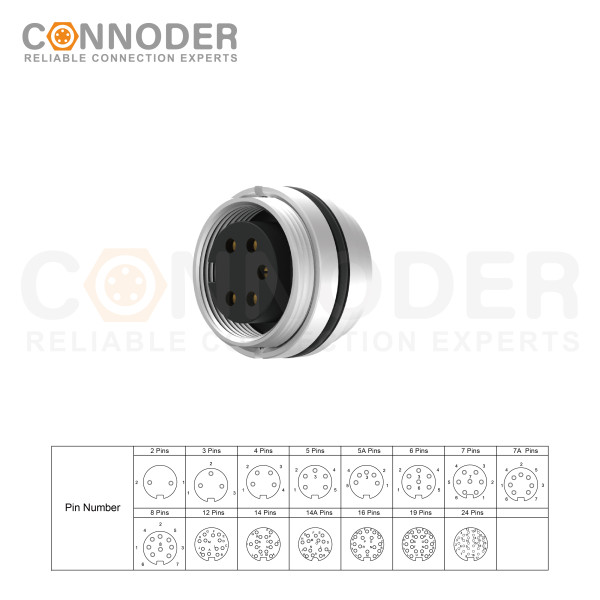
M16 6 Pin Circular Connector assemblies are ideal for demanding industrial applications such as industrial automation and aerospace, marine, and telecom systems.
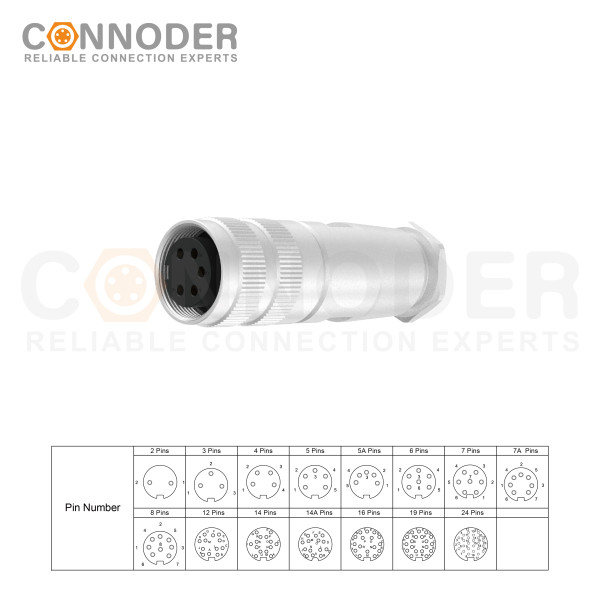
M16 6 Pin Circular Connector are ideal for demanding industrial applications such as industrial automation and aerospace, marine, and telecom systems. M16 Circular Connector are available in quick-lock wiring assembly types with IP67 protection and a vibration-resistant screw design.
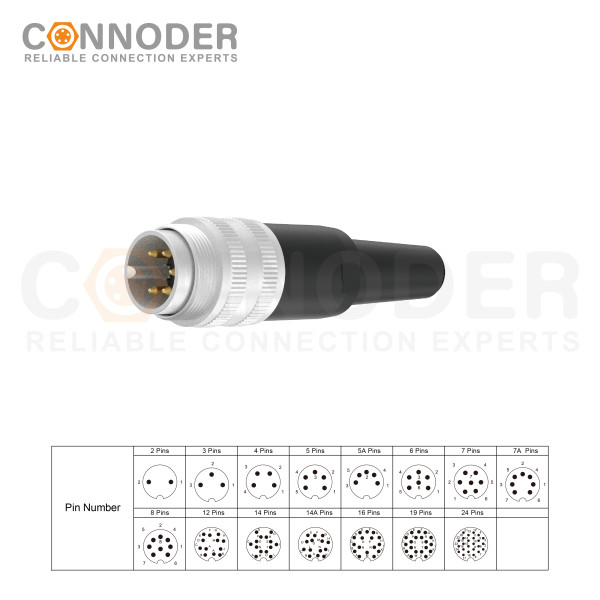
M16 6 Pin Circular Connector are ideal for demanding industrial applications such as industrial automation and aerospace, marine, and telecom systems. M16 Sensor connector are available in quick-lock wiring assembly types with IP67 protection and a vibration-resistant screw design.