M Series Connectors Selection Guide: Specs, Types, & Usag
- Share
- Issue Time
- Feb 28,2026
Summary
In modern industrial systems, selecting the right circular connector directly impacts performance, safety, and long-term reliability. This guide combines a comprehensive Circular Connector Selection Guide with a detailed breakdown of M Series connectors specifications, types, and usage scenarios, helping engineers and buyers make informed decisions.
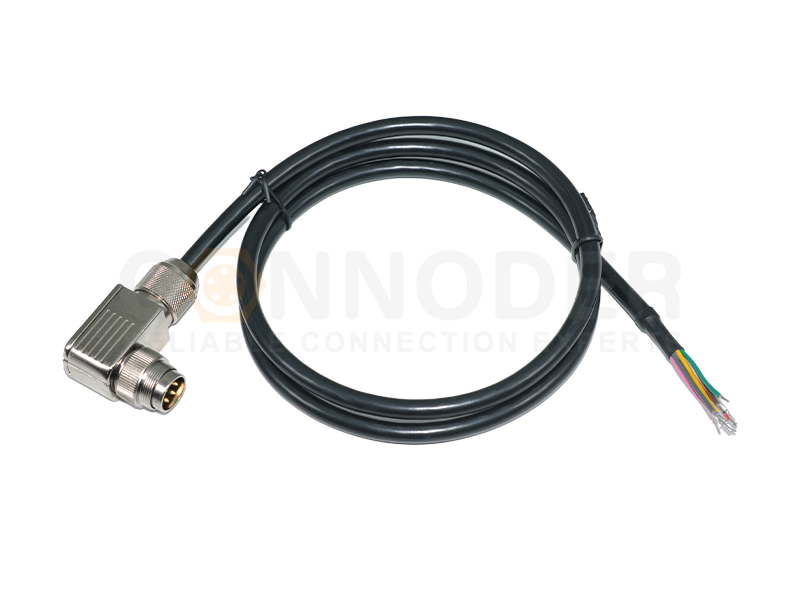
M Series Connectors Selection Guide: Specs, Types, & Usag
Introduction
In modern industrial systems, selecting the right circular connector directly impacts performance, safety, and long-term reliability. This guide combines a comprehensive Circular Connector Selection Guide with a detailed breakdown of M Series connectors specifications, types, and usage scenarios, helping engineers and buyers make informed decisions.
Circular Connectors
Rugged, compact and versatile — ideal when you need mixed power & signal plus environmental protection.
What Is a Circular Connector?
Circular connectors are round, multi-pin connectors designed for secure and stable electrical connections in demanding environments. Their threaded locking mechanism provides strong vibration resistance, reliable sealing, and long mating cycles.
High vibration resistance
IP67/IP68 environmental protection
Reliable power and signal transmission
Compact and standardized interface
Understanding M Series Connectors
M Series connectors are metric-threaded circular connectors identified by their diameter (e.g., M5, M8, M12, M16). They are widely adopted in industrial automation and control systems.
Common M Series Types
| Type | Typical Application | Key Feature |
| M5 | Compact sensors | Ultra-small footprint |
| M8 | Sensors & I/O modules | Space-saving & versatile |
| M12 | Industrial Ethernet & automation | Most popular industrial standard |
M16 | Higher power applications | Larger contact capacity |
Step-by-Step Circular Connector Selection Guide
1. Define Electrical Requirements
Determine rated voltage, rated current, signal type (power, analog, digital, Ethernet), and number of pins. For example, industrial Ethernet typically requires D-coded or X-coded M12 connectors.
2. Evaluate Mechanical Requirements
Consider mounting style (panel mount, field installable, cable assembly), straight vs right-angle structure, mating cycles, and installation space constraints.
3. Assess Environmental Conditions
Ensure connectors meet environmental needs such as IP67/IP68 sealing, oil resistance, vibration durability, and temperature range requirements.
4. Select Proper Coding
Coding prevents mismating and ensures correct signal routing. A-code is for general signal, D-code for Ethernet, and X-code for high-speed data.
Applications of M Series Circular Connectors
Industrial Automation: PLC systems, sensors, actuators
Robotics: Compact and vibration-resistant connectivity
Industrial Ethernet: Reliable data transmission
Smart Manufacturing: IIoT device connectivity
About Connoder
Connoder specializes in manufacturing high-performance industrial circular connectors including M5, M8, M9, M12, M16, and 7/8″ connectors. Our products are designed with high IP protection ratings and stable electrical performance to meet automation and industrial networking requirements.
We provide standardized solutions and customized connector assemblies for OEMs and system integrators worldwide.
Conclusion
Selecting the right circular connector requires evaluating electrical specifications, mechanical structure, environmental resistance, coding compatibility, and application demands. M Series connectors remain the backbone of industrial connectivity due to their reliability and versatility.
Partnering with an experienced manufacturer like Connoder ensures long-term performance, stable supply, and professional technical support.
What is a Circular Connector Selection Guide?
A Circular Connector Selection Guide helps engineers and buyers choose the correct connector based on electrical ratings, mechanical structure, environmental protection (IP rating), and application requirements. It ensures proper signal transmission, durability, and compatibility in industrial systems.
What are the main types of M Series connectors?
The main M Series connectors include M5, M8, M12, and M16.
M5 is used for compact sensors.
M8 is suitable for space-limited devices.
M12 is widely used in industrial automation and Ethernet applications.
M16 supports higher current and power requirements.
Each type varies in pin count, current rating, and application scope.
How do I choose the right M12 connector coding?
M12 connector coding depends on the signal type:
A-code for general signal and power
D-code for industrial Ethernet
X-code for high-speed data transmission
K/S-code for higher power applications
Choosing the correct coding prevents mismating and ensures signal integrity.
Why is IP rating important when selecting circular connectors?
IP rating determines a connector’s resistance to dust and water. For industrial automation, IP67 or IP68 connectors are commonly required to ensure stable performance in harsh environments such as factories, outdoor installations, or humid conditions.
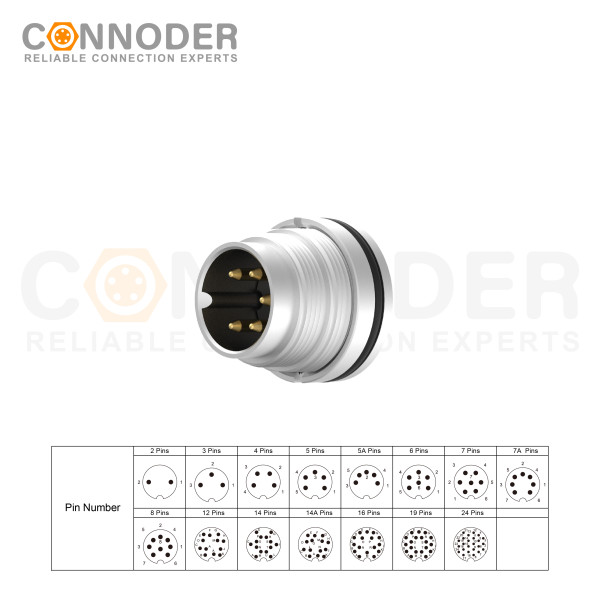
M16 6 Pin Circular Connector A-Code Interface, Waterproof Connector Receptacle Cable, Straight, Front-Locking, Unshielded
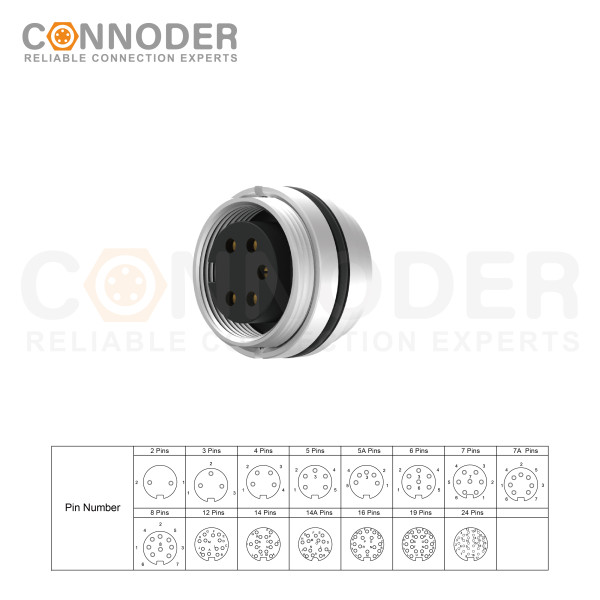
M16 6 Pin Circular Connector assemblies are ideal for demanding industrial applications such as industrial automation and aerospace, marine, and telecom systems.
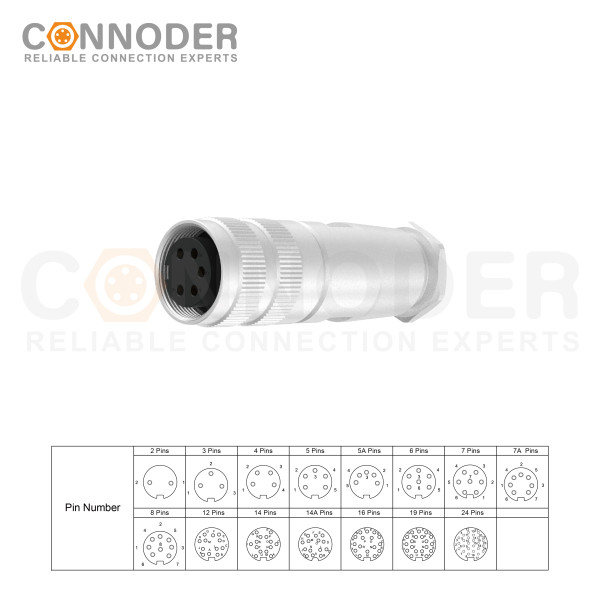
M16 6 Pin Circular Connector are ideal for demanding industrial applications such as industrial automation and aerospace, marine, and telecom systems. M16 Circular Connector are available in quick-lock wiring assembly types with IP67 protection and a vibration-resistant screw design.
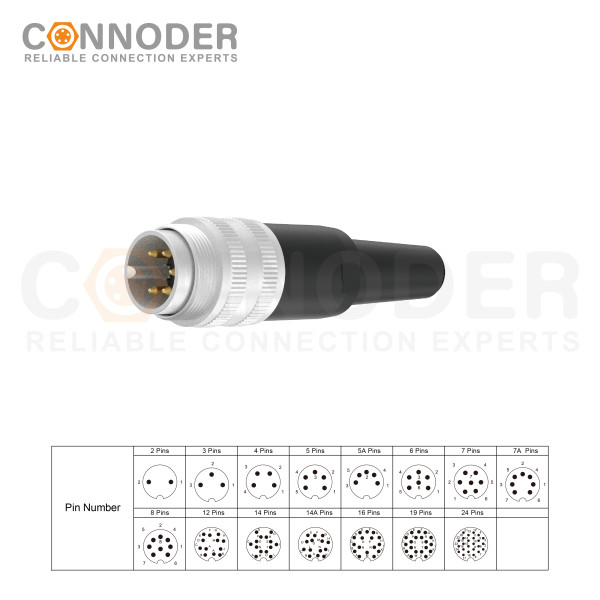
M16 6 Pin Circular Connector are ideal for demanding industrial applications such as industrial automation and aerospace, marine, and telecom systems. M16 Sensor connector are available in quick-lock wiring assembly types with IP67 protection and a vibration-resistant screw design.