How to select cables with appropriate specifications correctly

How to select cables with appropriate specifications correctly

Summary

Selecting a cable is not simply a matter of choosing the right wire size. The correct cable must match the electrical, mechanical, environmental, and installation requirements of the application.
How to select cables with appropriate specifications correctly

Introduction

Selecting a cable is not simply a matter of choosing the right wire size. The correct cable must match the electrical, mechanical, environmental, and installation requirements of the application.

Whether you are designing industrial automation equipment, connecting sensors, building a control system, developing robotic machinery, or purchasing cable assemblies for OEM production, the wrong cable specification can lead to excessive voltage drop, overheating, signal interference, insulation damage, mechanical failure, and unexpected downtime.

So, how do you select the right cable correctly? The most reliable approach is to start with the application and work through the required specifications step by step. You need to evaluate voltage, current, conductor size, cable length, conductor material, insulation, temperature, flexibility, shielding, environmental conditions, certifications, and connector compatibility.
Circular Connectors
Circular Connectors
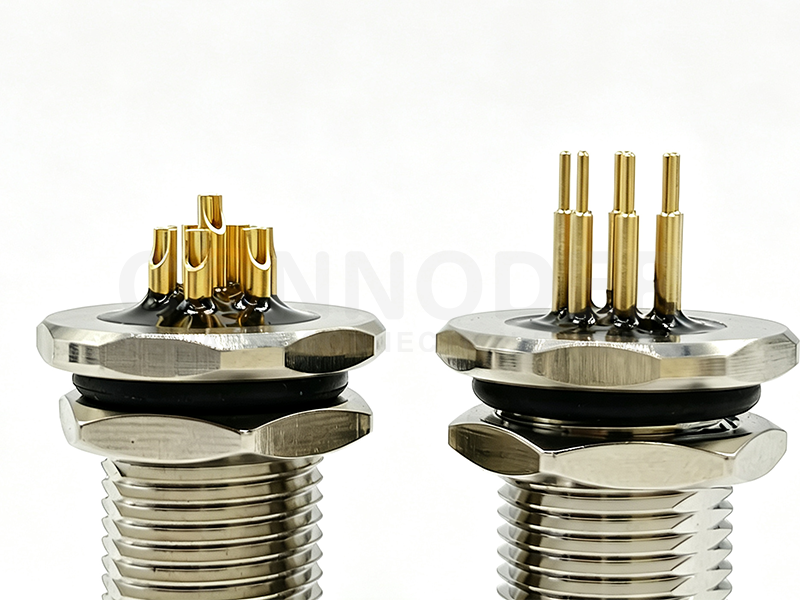
Rugged, compact and versatile — ideal when you need mixed power & signal plus environmental protection.

How to Select the Right Cable: 12 Key Factors

1. Start With the Application
The first question should always be: Where will the cable be used?

Before looking at cable catalogs or product numbers, define the application. A cable used for an industrial sensor has different requirements from a cable used to power a motor. Similarly, a stationary control-cabinet cable may not be suitable for a robotic arm.

Typical industrial cable applications include:

Industrial automation
Sensors
PLC control systems
CNC machinery
Robotics
Motors and actuators
Industrial Ethernet
Measurement equipment
Machine vision systems
Outdoor equipment
Control cabinets
Factory production lines
You should also determine whether the cable is used for power, control, signal, data, sensor connection, or communication. The application defines most of the specifications that follow.

2. Determine the Required Voltage Rating
The cable's voltage rating must be suitable for the system in which it will operate.

Determine:

AC or DC
Nominal operating voltage
Maximum operating voltage
Possible transient conditions
Applicable safety requirements
The insulation system must provide adequate electrical isolation under the actual operating conditions.

3. Determine Current and Ampacity
Current capacity is one of the most important cable specifications. The conductor must safely carry the required current without excessive temperature rise.

Start by identifying:

Continuous operating current
Peak current
Startup or inrush current
Number of loaded conductors
Ambient temperature
Installation method
Enclosure conditions
A cable's current capacity can change depending on how it is installed. Therefore, cable ampacity should be evaluated under actual installation conditions, including applicable derating requirements.

4. Select the Correct Cable Size: AWG or mm²
After determining current requirements, select the appropriate conductor cross-section. Cable size is commonly expressed using AWG or mm².

The conductor cross-sectional area affects:

Current-carrying capacity
Electrical resistance
Voltage drop
Heat generation
Mechanical flexibility
Terminal compatibility

5. Check Cable Length and Voltage Drop
As cable length increases, conductor resistance increases. This can cause voltage drop, particularly in low-voltage systems and higher-current applications.

Before finalizing the cable specification, evaluate:

Cable length
Conductor resistance
Operating current
System voltage
Allowable voltage drop
Operating temperature

6. Choose the Right Conductor Material
The conductor material affects electrical conductivity, weight, flexibility, cost, and termination requirements.

Copper Conductors
Copper is widely used in industrial cables because of its high conductivity and good termination characteristics. It is common in power, control, sensor, communication, automation and cable assembly applications.

Aluminum Conductors
Aluminum offers lower weight and can provide cost advantages in certain applications. Its lower conductivity may require a larger conductor cross-section, and termination considerations should be evaluated.


Material Typical Characteristics Typical Applications
PVCCost-effective and versatileGeneral industrial wiring
XLPEGood thermal and electrical performancePower and industrial applications
SiliconeFlexible and temperature resistantHigh-temperature applications
TPU/PURGood abrasion and chemical resistanceIndustrial machinery and dynamic applications
PTFE/FEPExcellent chemical and temperature resistanceSpecialized industrial applications
LSZHLow-smoke, halogen-free characteristicsEnclosed and public environments
For example, high-temperature applications may require high-temperature insulation, oil exposure may require an oil-resistant jacket, and continuous movement may require a flexible jacket construction.

8. Consider the Operating Temperature
Temperature directly affects cable performance and service life. Identify the minimum ambient temperature, maximum ambient temperature, continuous operating temperature, short-term peaks, conductor heat generation, and nearby heat sources.

The actual installation temperature may be higher because of enclosed equipment, high current, poor ventilation, nearby motors, heating elements, or high-density cable routing.

9. Evaluate Flexibility and Bend Radius
Determine whether the cable is stationary or moving. A fixed cable may be routed inside a control cabinet, conduit, cable tray, or machine frame. A dynamic cable may be installed on robotic arms, drag chains, or moving machine components.

Dynamic applications require careful consideration of:

Stranding
Flexibility
Minimum bend radius
Torsion
Flex life
Jacket material
Cable routing
A cable being stranded does not automatically mean it is suitable for continuous flexing. For repeated-motion applications, specify a cable construction designed for the actual movement profile.

10. Determine Whether Cable Shielding Is Required
Shielding becomes important when electromagnetic interference may affect system performance. This is particularly relevant when signal or communication cables are installed close to motors, variable-frequency drives, high-current power cables, or switching power supplies.

Common shielding structures include:

Foil shielding
Braided shielding
Foil and braid combination shielding
Shielding performance also depends on shield termination, grounding, connector construction, and cable routing. Therefore, shielding should be considered as part of the complete interconnection system.

11. Consider the Environmental Conditions
Industrial cables may operate in much harsher conditions than cables used in ordinary indoor installations.

Water and moisture
Dust
Oil and lubricants
Coolants and chemicals
Solvents
UV radiation
Abrasion
Vibration
Impact
Extreme temperatures
For outdoor or washdown equipment, evaluate the cable, connector, sealing components, and complete cable assembly together. An IP-rated connector alone does not automatically make the entire cable assembly suitable for every ingress-protection requirement.

12. Check Cable and Connector Compatibility
This is one of the most important steps for industrial applications. A cable cannot be evaluated independently from its connector when the two are used as an assembly.

Before selecting a connector for a cable, check:

Number of conductors
Conductor cross-section
Cable outer diameter
Rated current
Rated voltage
Contact type
Termination method
Shielding
Strain relief
Sealing
IP protection
Temperature range
Cable flexibility

Cable Selection for Different Industrial Applications

Industrial Sensors
For sensors, consider signal type, number of conductors, conductor size, shielding, flexibility, environmental protection, and connector compatibility. Compact circular connectors such as M8 and M12 are commonly considered for sensor and automation connections.

PLC and Control Systems
Control systems may require multiple conductors, appropriate voltage rating, signal integrity, shielding, flexible routing, and reliable termination.

Robotics
Robotic applications require special attention to continuous flexing, bend radius, torsion, flex life, jacket material, cable routing, and strain relief.

CNC Machines
CNC applications may expose cables to coolant, oil, vibration, abrasion, repeated movement, and electromagnetic interference. Cable selection should therefore consider both electrical and mechanical conditions.

Industrial Ethernet
For industrial communication applications, evaluate data transmission requirements, shielding, EMC, impedance, cable construction, flexibility, environmental resistance, and connector compatibility.

Common Cable Selection Mistakes to Avoid

1. Choosing Only by Current

Cable length, voltage drop, temperature, installation method, insulation, and environmental conditions also matter.

2. Choosing the Cheapest Cable

Consider total cost of ownership, including replacement, labor, downtime and troubleshooting.

3. Ignoring Temperature

Always check the actual minimum and maximum operating temperatures.

4. Using the Wrong Insulation

Select insulation and jacket materials according to actual temperature, chemical and mechanical requirements.

5. Using a Standard Cable for Continuous Motion

Dynamic applications require cable constructions designed for repeated bending and movement.

6. Ignoring Shielding

Sensitive signals may require shielding when routed near motors, drives or high-current conductors.

7. Selecting Cable and Connector Separately

Cable OD, conductor size, termination, shielding, sealing and connector entry range must be compatible.

8. Checking Certifications Too Late

Identify required standards and certifications before purchasing the cable.
 How do I select the right cable for my application?

To select the right cable, first identify the application and operating environment. Then consider voltage, current, cable length, conductor size, voltage drop, insulation, temperature range, flexibility, shielding, environmental conditions, applicable standards, and connector compatibility.
How do I choose the correct cable size?

 Cable size should be selected according to the required current, conductor material, allowable voltage drop, cable length, installation conditions, and operating temperature. For industrial applications, both AWG and mm² specifications should be checked to ensure the cable can safely handle the expected load.
What factors should be considered when selecting an industrial cable?

Important factors include voltage and current requirements, temperature, mechanical stress, bending and flexing, moisture, dust, chemicals, electromagnetic interference, installation environment, cable length, shielding, and applicable industry standards.
Why is cable and connector compatibility important?

A cable and connector should be treated as one complete interconnection system. Their wire size, current rating, voltage rating, termination method, temperature range, sealing performance, shielding, and mechanical structure must be compatible. Proper matching helps improve connection reliability and reduce failures in industrial equipment.
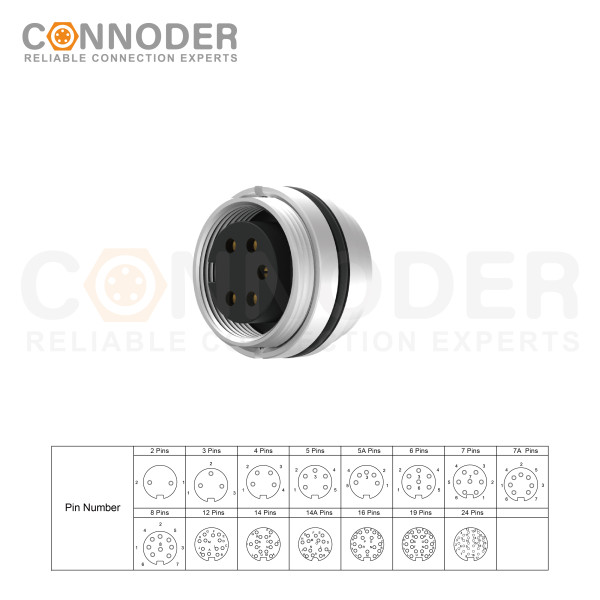
Wholesale M16 6 Pin Circular Connector | Rear Panel Mounted Welded Type Connector Ip67 Waterproof, Industrial Automation Signal Connector
M16 6 Pin Circular Connector A-Code Interface, Waterproof Connector Receptacle Cable, Straight, Front-Locking, Unshielded
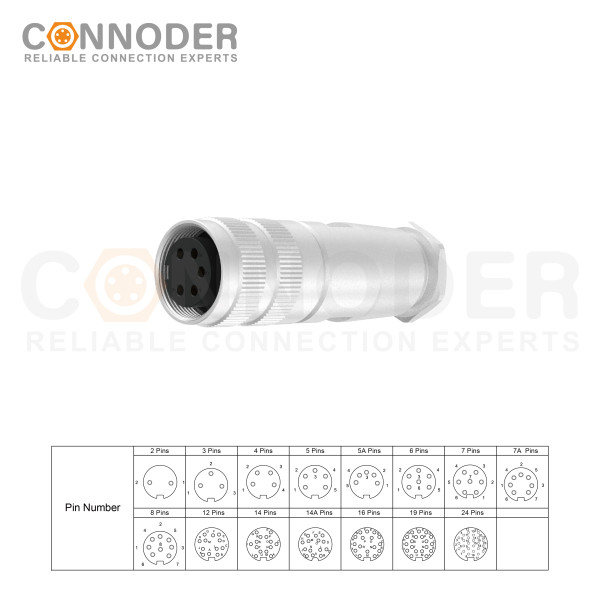
Wholesale M16 Female 6 Pin Circular Connector |  Waterproof Straight Solder Cable Front Fastened Industrial Automation Connector(M18*0.75)
M16 6 Pin Circular Connector assemblies are ideal for demanding industrial applications such as industrial automation and aerospace, marine, and telecom systems.
Wholesale M16 Female 6 Pin Straight Female Solder Circular Connector | Assembled Metal Housing C091 Plug Waterproof Connector
M16 6 Pin Circular Connector are ideal for demanding industrial applications such as industrial automation and aerospace, marine, and telecom systems. M16 Circular Connector are available in quick-lock wiring assembly types with IP67 protection and a vibration-resistant screw design.
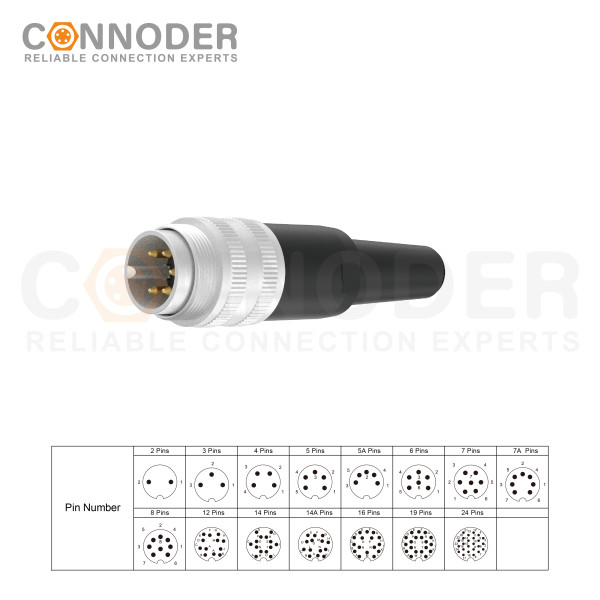
Wholesale M16 Male 5 Pin Circular Connector |  waterproof IP65 Straight Metal Plastic Solder Assembly plug 2 3 4 5 6 7 8 12 14 16 19 24Pin with Plastic Tube
M16 6 Pin Circular Connector are ideal for demanding industrial applications such as industrial automation and aerospace, marine, and telecom systems. M16 Sensor connector are available in quick-lock wiring assembly types with IP67 protection and a vibration-resistant screw design.