How to Choose the Right Connector Material for Your Application
- Share
- Issue Time
- Sep 30,2026
Summary
Selection of materials for circular connectors is a critical engineering decision that can directly affect electrical performance, mechanical durability, corrosion resistance and service life. The right material depends on the application—not simply on price or the material that is most commonly used.
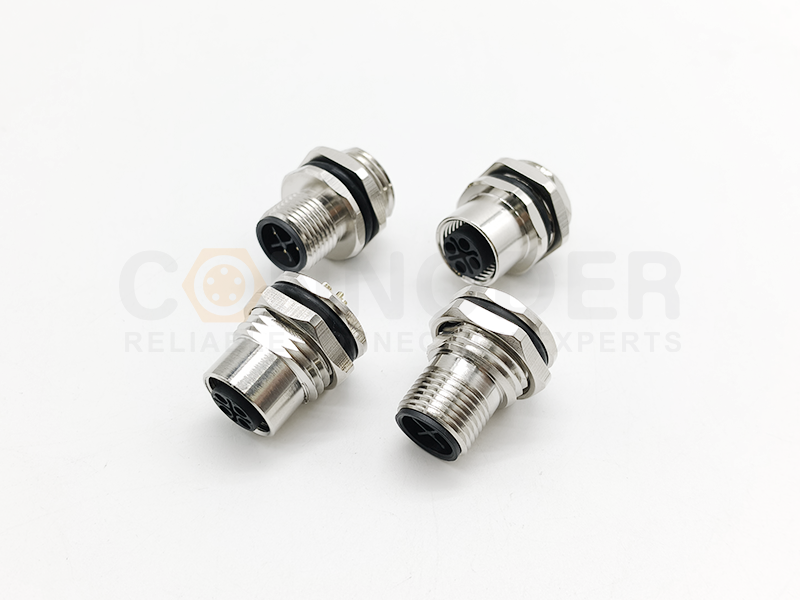
How to Choose the Right Connector Material for Your Application
Introduction
Selection of materials for circular connectors is a critical engineering decision that can directly affect electrical performance, mechanical durability, corrosion resistance and service life. The right material depends on the application—not simply on price or the material that is most commonly used.
Industrial circular connectors may be exposed to moisture, vibration, chemicals, salt spray, temperature fluctuations, repeated mating and mechanical stress. A reliable design therefore requires the right combination of housing material, contact alloy, plating, insulator and sealing material.
This guide explains how to choose the right connector material for your application, compares common material options, and provides a practical framework for selecting materials for M8, M12, M16 and other industrial circular connectors.
Circular Connectors
Rugged, compact and versatile — ideal when you need mixed power & signal plus environmental protection.
Why Material Selection Matters for Circular Connectors
A circular connector is not made from one material. It is a complete assembly containing several materials, each performing a different function.
Connector housing
Electrical contacts
Contact plating
Insulating components
Sealing elements
Cable jacket and overmolding
Locking and mechanical components
The housing provides mechanical and environmental protection. Contacts need suitable electrical conductivity and mechanical resilience. Insulators maintain dielectric performance, while seals help maintain environmental protection under the expected operating conditions.
What Materials Are Used in Circular Connectors?
1. Housing Materials
Common housing materials include aluminum alloys, stainless steel, brass, engineering plastics and composite materials. Each provides a different balance of weight, strength, corrosion resistance, manufacturability and cost.
2. Contact Materials
Electrical contacts are commonly manufactured from copper-based alloys such as brass, phosphor bronze and beryllium copper. Contact materials must balance conductivity with spring properties, wear resistance and fatigue performance.
3. Contact Plating
Gold, tin and nickel are common contact finishes. Plating can influence corrosion resistance, wear characteristics and long-term electrical contact stability.
4. Insulating Materials
PA66, PBT, PPS, LCP and PEEK are examples of polymer materials used for insulating components. The appropriate grade depends on temperature, dielectric requirements, dimensional stability and environmental exposure.
5. Sealing Materials
EPDM, FKM, silicone and polyurethane may be considered for sealing applications. Selection should account for temperature, chemicals, UV exposure, oil resistance and mechanical movement.
How to Choose the Right Connector Material for Your Application
Step 1: Identify the Operating Environment
Start by identifying where the connector will operate. Indoor automation equipment may have relatively controlled conditions, while outdoor, marine and chemical environments can introduce moisture, UV radiation, salt spray and aggressive chemicals.
Engineering principle: Do not select a connector material before defining the environment in which the connector must operate.
Step 2: Consider Weight Requirements
Weight can be especially important in transportation, robotics, portable equipment and aerospace-related systems. Aluminum and engineered polymers can be considered when weight reduction is a priority, but weight should always be evaluated together with mechanical strength and environmental resistance.
Step 3: Evaluate Temperature Requirements
Check the minimum and maximum operating temperature, temperature cycling and heat generated by electrical current. The housing, contacts, insulator, seal and cable jacket should all be compatible with the expected temperature range.
Step 4: Evaluate Mechanical Loads
Vibration, shock, cable movement, mating cycles and mechanical loads can influence material selection. High-vibration applications require the material system and mechanical design to work together.
Aluminum vs. Stainless Steel vs. Brass for Circular Connector Housings
| Housing Material | Main Advantages | Key Considerations | Typical Applications |
|---|---|---|---|
| Aluminum | Lightweight, good strength-to-weight ratio, machinable | Surface treatment may be needed in aggressive environments | Automation, transportation, portable equipment |
| Stainless Steel | High corrosion resistance and mechanical durability | Higher weight and generally higher cost | Marine, chemical, outdoor and harsh environments |
| Brass | Good machinability and mechanical stability | Heavier than aluminum; surface protection may be required | Industrial and specialized applications |
| Engineering Plastic | Lightweight, electrically insulating and corrosion-resistant | Performance depends on the polymer grade | Sensors, automation and cost-sensitive applications |
There is no universal best housing material. The correct choice depends on the application's environmental, mechanical, electrical and cost requirements.
Why Work with CONNODER for Custom Circular Connectors?
CONNODER focuses on industrial circular connector development and manufacturing. Its product and company information covers multiple circular connector families, customization capabilities and manufacturing processes for metal and polymer components.
For customers whose material requirements are not yet finalized, an application-oriented approach can help connect the material decision with the complete connector specification.
Conclusion
The selection of materials for circular connectors should not be reduced to choosing between aluminum, stainless steel, brass or plastic. A reliable connector is the result of a complete material system.
The correct combination depends on the application. Aluminum can be useful when weight is important; stainless steel can be appropriate for demanding corrosion environments; brass can provide a versatile solution for many industrial applications; and engineering polymers can offer lightweight and electrically insulating solutions where their properties match the design requirements.
For industrial automation, sensors, robotics, communication equipment and other demanding applications, selecting materials according to actual operating conditions can help improve connector reliability and reduce lifecycle problems.
With its M5, M8, M9, M12, M16 and 7/8" circular connector portfolio and customization capabilities, CONNODER 康诺德 can support application-oriented circular connector projects that need to balance material performance, environmental protection, electrical requirements and manufacturing requirements.
What factors should be considered when selecting materials for circular connectors?
The main factors include operating environment, temperature, corrosion exposure, mechanical loads, vibration, mating cycles, electrical requirements, sealing requirements, expected service life, and cost. The housing, contacts, plating, insulator and seal should be evaluated as a complete material system.
Which material is best for a circular connector housing?
There is no single material that is best for every application. Aluminum is useful when low weight is important, stainless steel is suitable for demanding corrosion environments, brass offers good mechanical and manufacturing properties, and engineering plastics can provide lightweight and electrically insulating solutions.
How do I choose the right contact material for a circular connector?
Contact material should be selected according to conductivity, mechanical strength, contact force, wear resistance, mating cycles and environmental conditions. Common options include brass, phosphor bronze and beryllium copper.
Why is contact plating important in circular connectors?
Contact plating can improve corrosion resistance, wear resistance and electrical contact stability. Gold, tin and nickel are commonly used finishes, with the appropriate choice depending on signal type, current, mating frequency and environmental conditions.
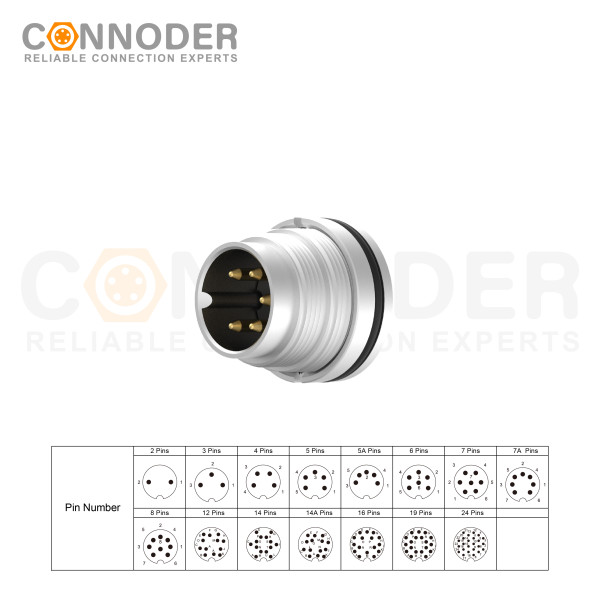
M16 6 Pin Circular Connector A-Code Interface, Waterproof Connector Receptacle Cable, Straight, Front-Locking, Unshielded
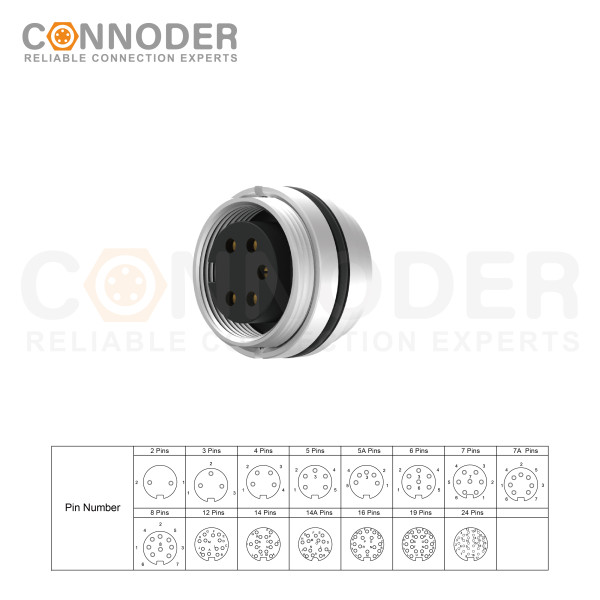
M16 6 Pin Circular Connector assemblies are ideal for demanding industrial applications such as industrial automation and aerospace, marine, and telecom systems.
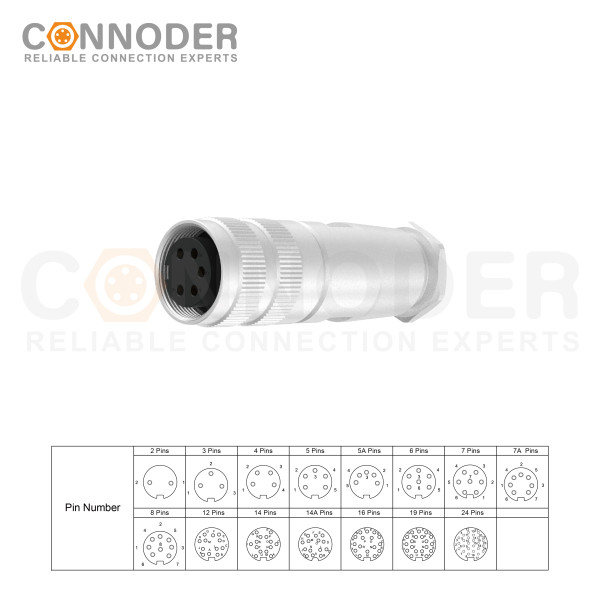
M16 6 Pin Circular Connector are ideal for demanding industrial applications such as industrial automation and aerospace, marine, and telecom systems. M16 Circular Connector are available in quick-lock wiring assembly types with IP67 protection and a vibration-resistant screw design.
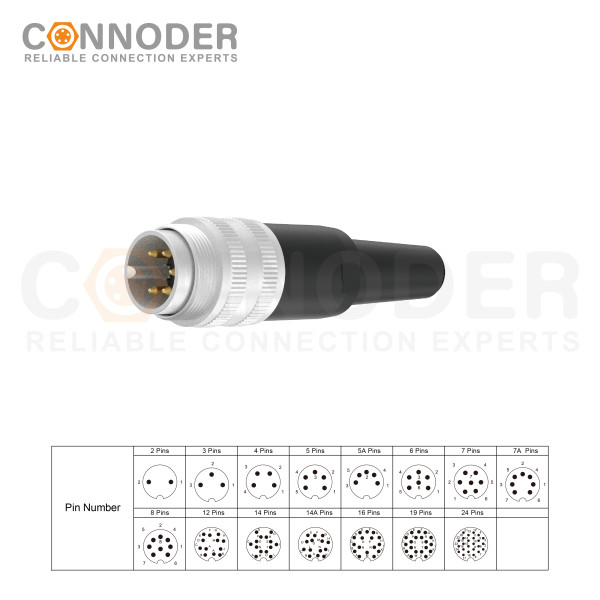
M16 6 Pin Circular Connector are ideal for demanding industrial applications such as industrial automation and aerospace, marine, and telecom systems. M16 Sensor connector are available in quick-lock wiring assembly types with IP67 protection and a vibration-resistant screw design.