How to Choose the Right Circular Connector: M8 vs M12 vs M16
- Share
- Issue Time
- Sep 14,2026
Summary
A practical guide to selecting circular connectors by thread size (M5/M8/M12/M16/M23), pin count and coding, IP rating, and shielding — with a comparison table, size chart, and FAQ for industrial automation engineers.
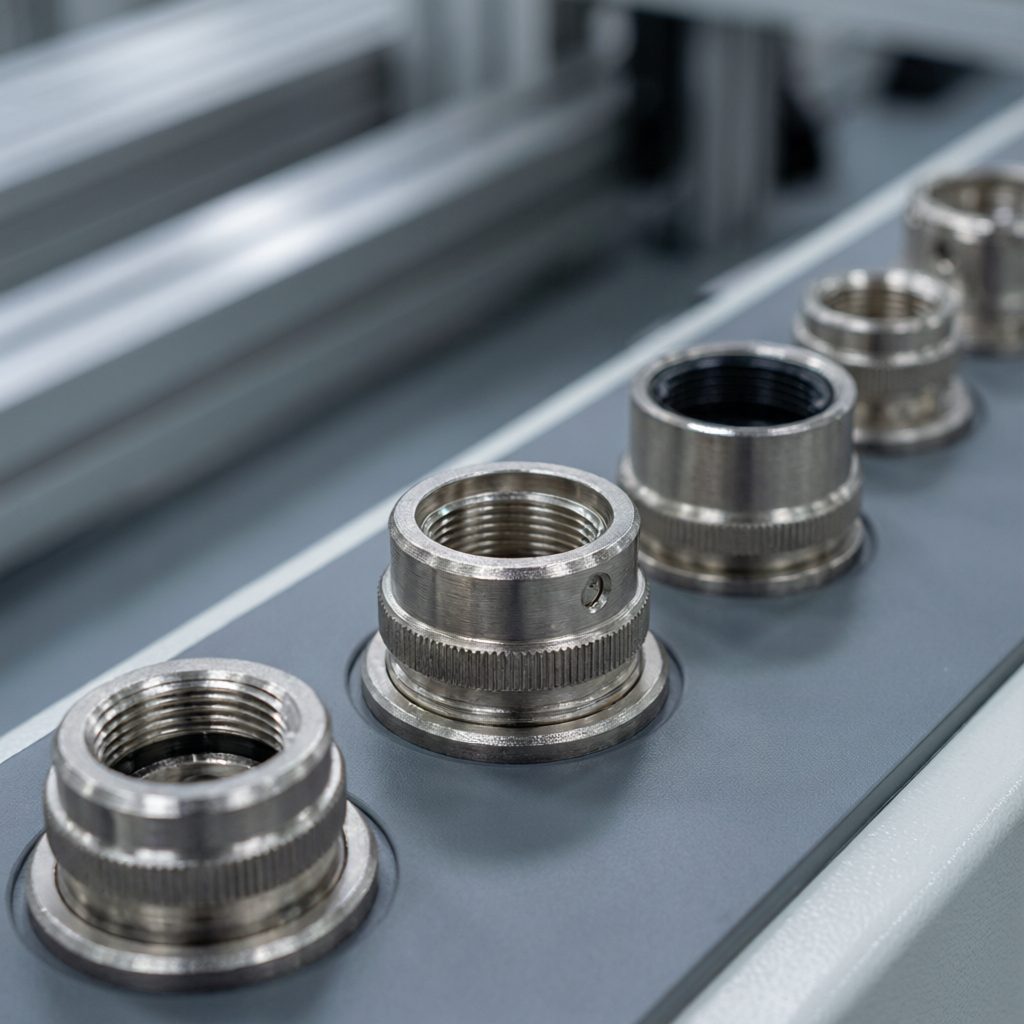
How to Choose the Right Circular Connector: M8 vs M12 vs M16
Choosing the right circular connector comes down to four variables: thread size, pin count and coding, ingress protection (IP), and shielding. Start from your available space and current/pin requirements, then match the environment and signal type. This guide compares the most common metric sizes so you can specify with confidence.
Quick comparison
| Size | Thread | Typical pins | Common coding | Typical IP | Best for |
|---|---|---|---|---|---|
| M5 | 5 mm | 3-4 | A | IP67 | Miniature sensors, tight spaces |
| M8 | 8 mm | 3-4 (up to 8) | A | IP67 | Compact sensors, signal only |
| M12 | 12 mm | 3-17 | A/B/D/S/T/X | IP65-IP69K | Sensors, actuators, Industrial Ethernet |
| M16 | 16 mm | up to 19 | A/S/T | IP67-IP68 | Power, board-to-board, heavier duty |
| M23 | 23 mm | up to 19 | A/S | IP67-IP68 | Servo power, high pin count |
1. Thread size and space
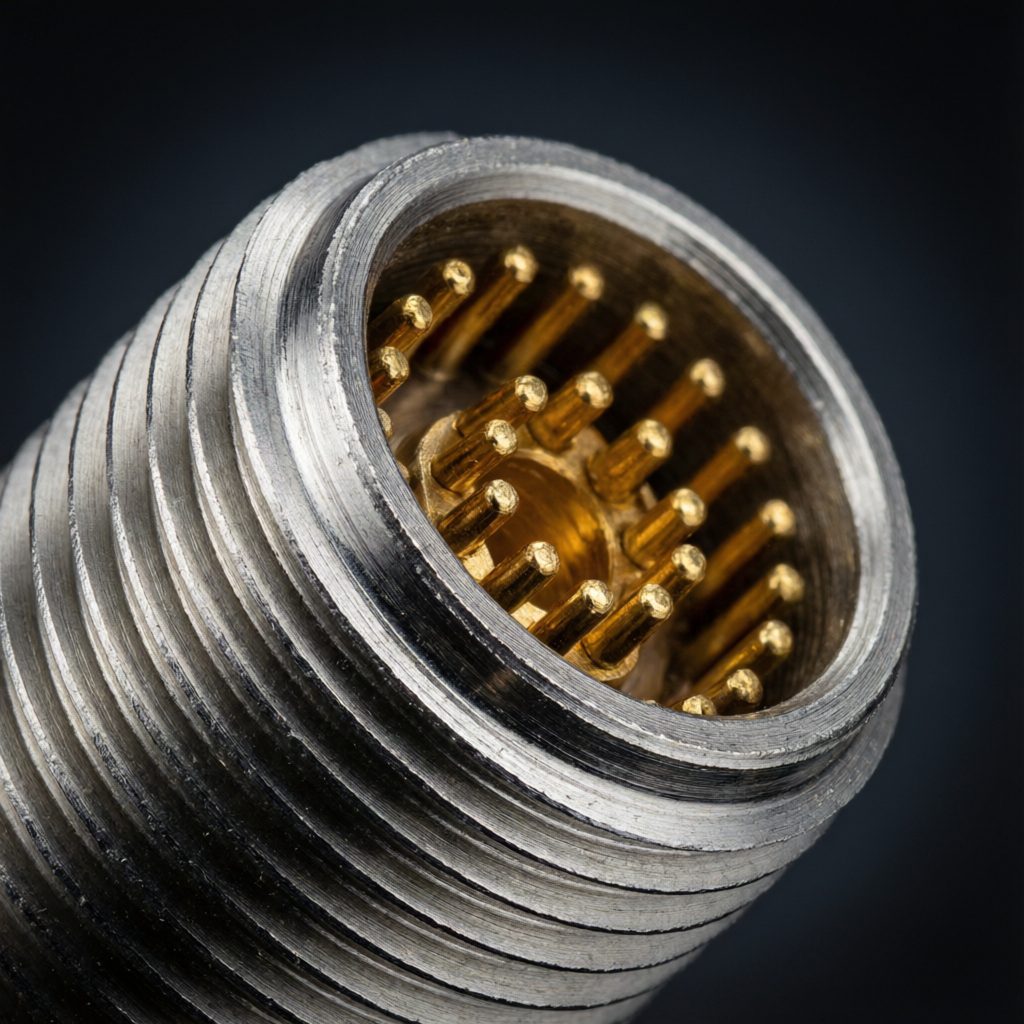
Thread diameter sets the physical envelope and the maximum pin count. Smaller threads (M5/M8) save space at sensor endpoints; larger threads (M12/M16/M23) carry more pins and higher current. Use the chart below as a quick visual reference.
2. Pin count and coding
Coding prevents mismating and defines the protocol a connector supports. The most common M12 codes are:
- A-code — general signal and low-speed data
- B / D-code — fieldbus and PROFINET
- X-code — high-speed Industrial Ethernet (up to 10 Gb)
- S-code — AC power
- T-code — high-current DC power
3. Ingress protection (IP rating)
IP ratings describe protection against solids and water. For circular connectors in industrial use:
- IP65 — dust-tight, low-pressure water jets
- IP67 — dust-tight, temporary immersion (1 m / 30 min)
- IP68 — dust-tight, continuous submersion at depth
- IP69K — high-pressure, high-temperature washdown

4. Shielding and EMI
If the signal is high-speed, analog, or runs near motors and drives, choose shielded connectors and cables. Proper shielding suppresses EMI/EMC and crosstalk, which is critical for Industrial Ethernet and measurement signals. Unshielded variants are acceptable for short, low-noise, DC-power-only runs.
Decision checklist
- Measure available space → pick the smallest thread that fits the pin count.
- Count signals/power → choose pins and coding (A/B/D/S/T/X).
- Assess the environment → select IP65/67/68/69K.
- Check noise → use shielded versions near drives and Ethernet.
- Confirm termination → field-wireable, PCB, or molded to your process.
Frequently asked questions
Related reading
- How to Properly Select a 7/8 Electrical Connector
- Complete Wiring Guide for Circular Connectors
- What is the basic structure of the M-series circular connector?
- Connoder circular connectors, cables & accessories
Summary
Specify circular connectors by working backwards from the application: space → pins/coding → environment (IP) → noise (shielding). M8 fits compact signal endpoints, M12 is the versatile workhorse for sensors and Industrial Ethernet, and M16/M23 handle power-dense and high-pin jobs. Get these four right and you minimize downtime and rework.