Do you know the major basic test items for connectors?
- Share
- Issue Time
- Oct 30,2026
Summary
Connectors play a critical role in industrial automation, electrical equipment, communication systems, and machinery. Although they are often small components, their performance directly affects the stability, safety, and reliability of entire electrical systems.
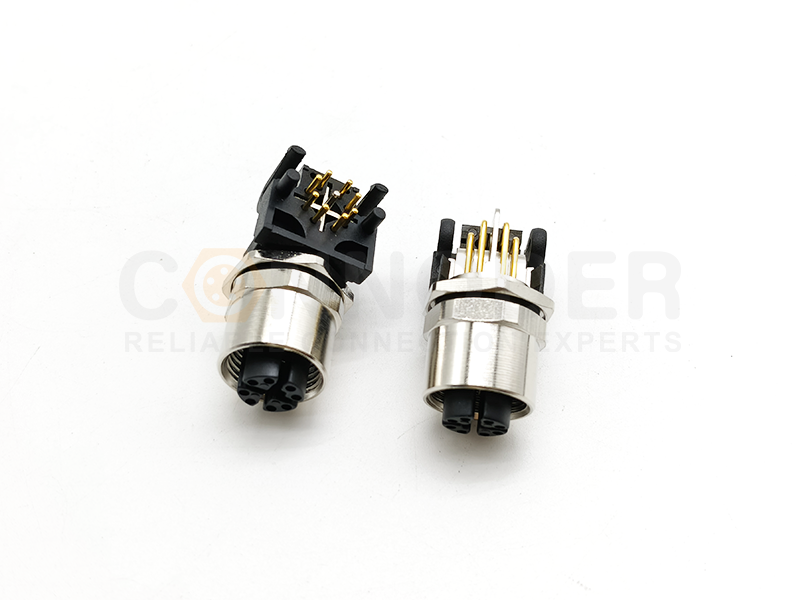
Do you know the major basic test items for connectors?
Introduction
Connectors play a critical role in industrial automation, electrical equipment, communication systems, and machinery. Although they are often small components, their performance directly affects the stability, safety, and reliability of entire electrical systems.
How can manufacturers determine whether a connector is qualified before it reaches the customer? The answer lies in comprehensive testing and quality inspection.
The basic test items of connectors generally cover electrical performance, mechanical performance, environmental resistance, and dimensional inspection. These tests help manufacturers identify potential defects, verify product specifications, and evaluate long-term reliability under different operating conditions.
In this guide, we explore the major basic test items for connectors, explain their testing methods and purposes, and discuss how to select reliable industrial circular connector solutions.
Circular Connectors
Rugged, compact and versatile — ideal when you need mixed power & signal plus environmental protection.
What Are the Basic Test Items of Connectors?
Connector testing refers to a series of inspections and performance evaluations used to verify whether a connector meets its design specifications and intended application requirements.
Different connector types have different structures, materials, electrical ratings, and operating environments. Therefore, their testing requirements may vary. Generally, connector testing can be divided into five major categories:
| Testing Category | Common Test Items | Main Purpose |
|---|---|---|
| Electrical Performance | Contact resistance, insulation resistance, withstand voltage, temperature rise | Verify electrical safety and conductivity |
| Mechanical Performance | Insertion force, withdrawal force, durability, vibration, shock | Evaluate mechanical strength and stability |
| Environmental Resistance | Temperature, humidity, salt spray, waterproof testing | Evaluate environmental adaptability |
| Dimensional Inspection | Pin dimensions, thread dimensions, housing dimensions | Verify dimensional accuracy |
| Material and Compliance | Material composition, restricted-substance testing | Verify applicable material and regulatory requirements |
These categories provide a practical framework for evaluating connector quality. Actual test plans and acceptance criteria should be determined according to product specifications, relevant standards, and customer requirements.
Electrical Performance Testing: Four Essential Test Items
Electrical performance is one of the most important aspects of connector quality inspection. A connector must maintain stable electrical contact while preventing unwanted leakage or dielectric breakdown. Poor electrical performance can cause signal interruptions, overheating, equipment malfunction, and potential safety risks.
Contact Resistance Test
Contact resistance testing measures the electrical resistance at the interface between two connected conductive contacts. When two connector contacts are mated, electrical conduction occurs through microscopic contact points. Surface conditions, contact pressure, plating quality, and material properties can all affect resistance.
Main purposes:
Verify electrical contact stability.
Identify poor contact or abnormal resistance.
Evaluate conductive contact surface quality.
Monitor resistance changes after mechanical or environmental testing.
A low-resistance measurement instrument, commonly a four-wire Kelvin measurement system, can be used to measure contact resistance under controlled conditions. Excessive contact resistance may generate additional heat when current passes through the connector. Over time, this can accelerate contact degradation and reduce service reliability.
Insulation Resistance Test
Insulation resistance testing evaluates how effectively insulating materials prevent unwanted electrical leakage between conductive contacts or between contacts and the connector housing, where applicable. Moisture, contamination, aging, and material defects may negatively affect insulation performance.
Main purposes:
Evaluate insulation quality.
Identify potential insulation defects.
Detect moisture-related degradation.
Verify electrical isolation under specified conditions.
A suitable insulation resistance tester applies a specified DC test voltage between designated conductive paths. The resulting leakage current is measured to determine insulation resistance. Insufficient insulation resistance may lead to leakage current, electrical interference, or safety problems.
Dielectric Withstanding Voltage Test
A dielectric withstanding voltage test, commonly called a Hi-Pot test, evaluates whether the insulation system can withstand a specified electrical stress without breakdown. Unlike insulation resistance testing, which measures resistance, this test evaluates the dielectric strength of the insulation system.
Main purposes:
Verify dielectric strength.
Identify insulation weaknesses.
Evaluate electrical isolation.
Reduce the risk of dielectric breakdown.
During testing, a specified AC or DC voltage is applied between designated conductive parts for a defined period. The test is monitored for breakdown, flashover, or excessive leakage current according to the applicable specification. Test voltage and duration must always follow the product specifications and relevant standards.
Temperature Rise Test
A temperature rise test measures the increase in connector temperature when a specified current flows through the connector under defined conditions. Electrical resistance generates heat during current transmission. If heat dissipation is insufficient, the connector may exceed its permitted operating temperature.
Main purposes:
Verify current-carrying performance.
Evaluate heat generation at contact interfaces.
Assess thermal performance.
Identify potential overheating risks.
The connector is connected to a controlled current source. Once the temperature reaches a defined stable condition, the temperature at specified measurement points is recorded and compared with the ambient temperature. This test is particularly important for power connectors and industrial connectors used in continuous-current applications.
Mechanical Performance Testing: Five Important Test Items
Electrical performance alone cannot determine the overall quality of a connector. Industrial connectors are frequently plugged and unplugged, exposed to vibration, subjected to mechanical loads, and installed in demanding environments. Mechanical testing helps evaluate whether connectors can maintain structural integrity and connection stability under these conditions.
Insertion and Withdrawal Force Test
This test measures the force required to mate and unmate two connector halves. It helps verify whether connectors can be connected and disconnected smoothly while maintaining appropriate mechanical engagement. A mechanical force testing machine applies controlled movement to the connector pair and records the force throughout the mating and unmating process.
Mechanical Durability Test
Mechanical durability testing evaluates connector performance after repeated mating and unmating cycles.
Evaluate mechanical service life.
Check contact wear and plating degradation.
Identify structural deformation.
Monitor electrical performance after repeated operation.
The connector is repeatedly mated and unmated according to a specified number of cycles and controlled conditions. Contact resistance and mechanical condition may be checked before and after testing.
Vibration Test
Vibration testing evaluates whether a connector can maintain reliable electrical and mechanical connections when exposed to vibration. This test is particularly important for industrial machinery, transportation equipment, and automation systems. Connectors are mounted on a vibration testing platform and exposed to specified frequencies, amplitudes, acceleration levels, and durations. Electrical continuity may be monitored during testing to identify intermittent contact problems.
Mechanical Shock Test
Mechanical shock testing evaluates a connector's ability to withstand sudden mechanical impacts. The test helps identify structural weaknesses, contact displacement, housing damage, and locking mechanism problems. Connectors are subjected to specified shock pulses using suitable testing equipment. Their structural and electrical conditions are evaluated afterward.
Contact Retention Force Test
This test evaluates the force required to displace or remove a contact terminal from its housing. It helps verify terminal retention strength and prevent contacts from moving during connector mating and operation. A controlled mechanical force is applied to the terminal, and the force required to cause displacement or removal is recorded.
Environmental Resistance Testing: Five Major Test Items
Industrial connectors are frequently exposed to moisture, dust, temperature fluctuations, corrosive substances, and outdoor conditions. Environmental resistance testing evaluates whether connectors can maintain their required performance under specified environmental conditions.
High and Low Temperature Test
This test evaluates whether connector materials, contact structures, and sealing components can maintain their required performance under specified temperature conditions. Samples are placed in a temperature-controlled chamber and exposed to defined high- or low-temperature conditions.
After testing, inspectors check for housing deformation, seal deterioration, material cracking, electrical performance changes, and mechanical connection abnormalities.
Temperature Cycling Test
Temperature cycling evaluates how repeated temperature changes affect connector reliability. Connectors are exposed to repeated high- and low-temperature cycles according to a defined test profile. After testing, samples are evaluated for structural changes, insulation performance, and contact resistance variations. This test helps identify problems associated with thermal expansion, contraction, and material compatibility.
Humidity Test
Humidity testing evaluates the effects of moisture on connector materials and electrical performance. Connectors are placed in a controlled humidity chamber under specified temperature and humidity conditions for a defined duration. After testing, they are inspected for corrosion, moisture-related damage, and changes in electrical performance.
Salt Spray Test
Salt spray testing evaluates the corrosion resistance of connector materials and surface finishes under a controlled salt-containing atmosphere. It is particularly relevant for connectors with metal housings used in coastal, marine, and outdoor industrial environments. Samples are exposed to a specified salt spray environment and inspected for corrosion and surface deterioration according to the applicable test criteria.
Waterproof and Dustproof Test
Waterproof and dustproof testing evaluates whether a connector's housing and sealing structure provide the required protection against solid particles and water ingress.
IP67: Includes dust-tight protection and protection against temporary immersion under specified conditions.
IP68: Includes dust-tight protection and protection against immersion under conditions agreed between the manufacturer and user.
Actual test conditions must be verified against the applicable IP requirements and product specifications.
Dimensional and Appearance Inspection
Dimensional and appearance inspection is another important part of connector quality control. Even small dimensional deviations can affect compatibility, mating performance, sealing effectiveness, and installation accuracy.
Dimensional Inspection
Common inspection items include connector housing dimensions, thread dimensions and tolerances, contact pin diameter and spacing, insulator dimensions, cable diameter and assembly dimensions, and sealing ring dimensions.
Typical inspection equipment includes digital calipers, micrometers, height gauges, coordinate measuring machines, and thread gauges. For industrial circular connectors, thread accuracy is particularly important because it affects mating compatibility and mechanical engagement.
Visual Appearance Inspection
Visual inspection helps identify defects that may affect product quality, assembly, or long-term performance.
Scratches and dents on metal housings.
Bent or damaged contact pins.
Uneven plating or discoloration.
Cracks or deformation in plastic components.
Missing or damaged sealing rings.
Contamination and foreign particles.
First Article Inspection
First Article Inspection (FAI) verifies whether an initial production sample meets approved engineering drawings and specified requirements. It commonly includes dimensional verification, material confirmation, structural inspection, functional testing, and documentation of measurement results. FAI is particularly useful when introducing new connector designs, changing tooling, or modifying manufacturing processes.
International Standards for Connector Testing
Connector testing should refer to relevant international standards and product-specific technical specifications rather than relying solely on general industry practices.
IEC 60512
IEC 60512 is a series of standards covering test methods and procedures for electrical connectors and related components. Depending on the applicable part, it provides methods for evaluating contact resistance, insulation resistance, dielectric strength, mechanical operation, vibration, mechanical shock, and climatic or environmental conditions.
IEC 61076
IEC 61076 covers connectors for electronic equipment. Different parts address specific connector families and interface requirements. For example, IEC 61076-2-101 specifies requirements for M12 connectors and related accessories. Engineers should identify the relevant standard part and connector configuration rather than assuming every M12 product has identical test requirements.
RoHS Compliance
RoHS is an important regulatory requirement for many electrical and electronic products. It restricts specified hazardous substances in applicable products and components. RoHS compliance is different from electrical and mechanical performance testing because it focuses on material composition and restricted-substance requirements. Passing an electrical test does not automatically mean that a connector complies with RoHS or other regulatory requirements.
How Do Professional Manufacturers Ensure Connector Quality?
Understanding connector testing items is only one part of quality assurance. A reliable manufacturer should establish a systematic quality management process covering product development, raw materials, manufacturing, assembly, testing, and final inspection.
Step 1: Raw Material Inspection
Incoming materials and components are checked before production. Typical inspection items include metal material specifications, contact plating quality, plastic housing materials, insulating materials, sealing materials, and cable specifications.
Step 2: Production Process Inspection
Quality personnel monitor key manufacturing processes, including precision metal stamping, plastic injection molding, terminal processing, connector assembly, cable molding, and automated assembly. Process inspection helps identify manufacturing deviations before they become finished-product defects.
Step 3: Electrical and Mechanical Inspection
Finished connector samples are evaluated according to their product specifications and quality control plans. Typical inspection items include contact resistance, insulation resistance, dielectric withstand voltage, mechanical mating performance, terminal retention, and dimensional accuracy.
Step 4: Environmental and Reliability Evaluation
Where required by product specifications or customer applications, additional testing may include waterproof and dustproof testing, temperature cycling, humidity testing, salt spray testing, and vibration testing.
Step 5: Final Quality Inspection
Before shipment, finished products undergo final quality verification. The process may include appearance checks, dimensional sampling, electrical testing, product identification, packaging verification, and documentation review. The specific sampling frequency and inspection criteria should be established in the manufacturer's quality plan and customer requirements.
Conclusion: Reliable Connectors Start with Comprehensive Testing
The basic test items of connectors are essential for verifying electrical performance, mechanical stability, environmental resistance, and manufacturing consistency. From contact resistance and insulation resistance testing to mechanical durability, temperature cycling, waterproof testing, and dimensional inspection, each test provides valuable information about connector performance.
However, testing should always be selected according to actual product specifications and application requirements rather than applying the same checklist to every connector.
For industrial equipment manufacturers, choosing a reliable connector supplier is equally important. With its experience in industrial circular connector development and manufacturing, CONNODER provides M5, M8, M9, M12, M16, and 7/8 circular connector solutions, together with customized product and cable services.
What are the basic test items of connectors?
The basic test items of connectors generally include electrical performance testing, mechanical performance testing, environmental resistance testing, dimensional inspection, and material compliance testing. Common tests include contact resistance, insulation resistance, dielectric withstand voltage, insertion force, vibration, temperature cycling, and waterproof testing.
Why is electrical performance testing important for connectors?
Electrical performance testing verifies whether a connector can provide stable and safe electrical transmission. Important tests include contact resistance, insulation resistance, dielectric withstand voltage, and temperature rise testing. These tests help identify potential electrical failures, overheating risks, and insulation problems.
What mechanical tests are commonly performed on industrial connectors?
Common mechanical tests include insertion and withdrawal force testing, mechanical durability testing, vibration testing, mechanical shock testing, and contact retention force testing. These tests evaluate the connector's mechanical strength, connection stability, and ability to withstand repeated operation.
How do manufacturers test the waterproof performance of industrial connectors?
Manufacturers generally conduct ingress protection (IP) tests according to applicable standards and product specifications. For example, IP67 testing evaluates dust-tight protection and resistance to temporary immersion under specified conditions, while IP68 testing evaluates protection against immersion under agreed conditions.
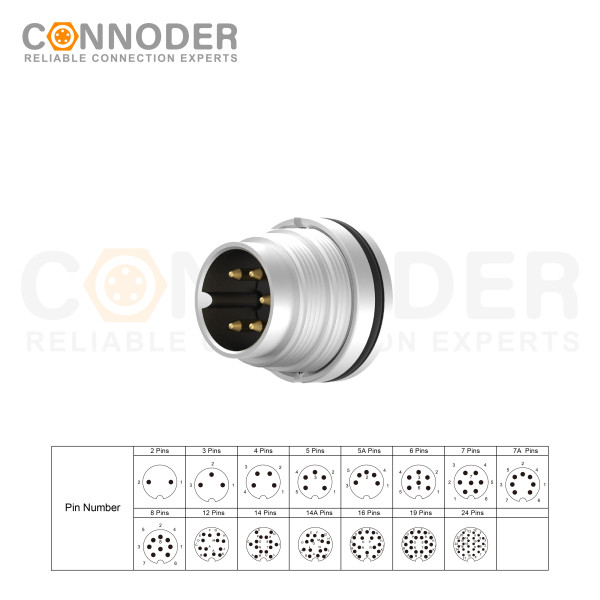
M16 6 Pin Circular Connector A-Code Interface, Waterproof Connector Receptacle Cable, Straight, Front-Locking, Unshielded
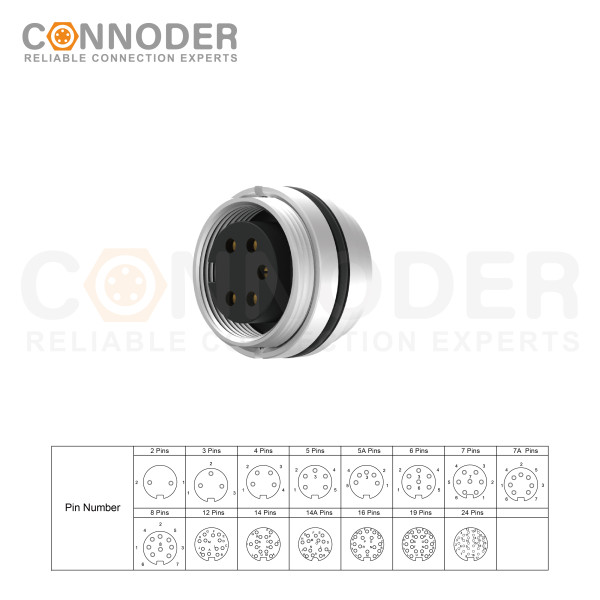
M16 6 Pin Circular Connector assemblies are ideal for demanding industrial applications such as industrial automation and aerospace, marine, and telecom systems.
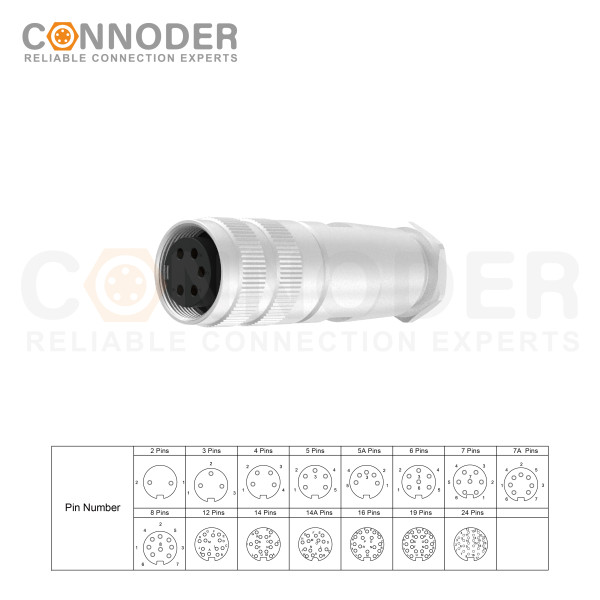
M16 6 Pin Circular Connector are ideal for demanding industrial applications such as industrial automation and aerospace, marine, and telecom systems. M16 Circular Connector are available in quick-lock wiring assembly types with IP67 protection and a vibration-resistant screw design.
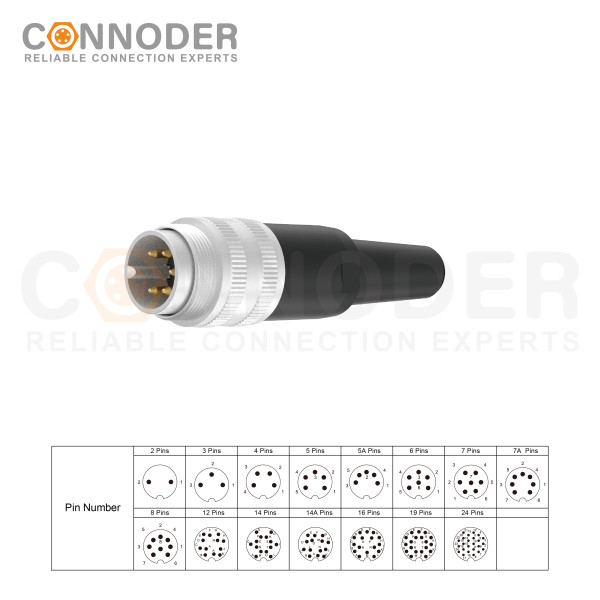
M16 6 Pin Circular Connector are ideal for demanding industrial applications such as industrial automation and aerospace, marine, and telecom systems. M16 Sensor connector are available in quick-lock wiring assembly types with IP67 protection and a vibration-resistant screw design.