Comparison of the cost-effectiveness between imported brand connectors and domestic alternative brands

Comparison of the cost-effectiveness between imported brand connectors and domestic alternative brands

Summary

In industrial automation, every connection matters. From sensors and actuators to robotic systems and control cabinets, connectors help ensure reliable signal transmission, stable power delivery, and efficient equipment operation. As manufacturers face cost pressure and changing supply-chain requirements, many purchasing teams are comparing imported connector brands with domestic alternatives.
Comparison of the cost-effectiveness between imported brand connectors and domestic alternative brands

Introduction

In industrial automation, every connection matters. From sensors and actuators to robotic systems and control cabinets, connectors help ensure reliable signal transmission, stable power delivery, and efficient equipment operation. As manufacturers face cost pressure and changing supply-chain requirements, many purchasing teams are comparing imported connector brands with domestic alternatives.

Are domestic connectors more cost-effective than imported brands? The answer depends on more than the initial purchase price. Product specifications, manufacturing quality, logistics, lead time, customization, maintenance, and qualification costs all influence the final decision.

A well-structured Imported VS Domestic Connectors: Cost-Benefit Analysis helps businesses understand these factors and identify a solution that delivers the best value for a specific application. The goal is not simply to purchase a cheaper connector, but to find a technically suitable, reliable, and commercially competitive solution.

CONNODER specializes in the development and manufacturing of industrial circular connectors and cable assemblies. Its product portfolio includes M5, M8, M9, M12, M16, and 7/8-inch circular connectors, providing industrial buyers with additional options to evaluate when developing their sourcing strategies.
Circular Connectors
Circular Connectors
Rugged, compact and versatile — ideal when you need mixed power & signal plus environmental protection.

Imported Connectors vs. Domestic Alternatives: What Are the Main Differences?

Imported and domestic connectors can both serve demanding industrial applications. Their actual performance depends on product design, materials, manufacturing processes, quality controls, and suitability for the intended environment.

Product Technology and Engineering Experience
Established international connector brands may offer extensive product portfolios, mature engineering processes, and long application histories. These advantages can be valuable when equipment requires specialized interfaces, established customer approvals, or detailed technical documentation.

Domestic manufacturers have also developed capabilities across many industrial connector categories. Depending on the supplier, they may provide standard products, application-specific configurations, cable assemblies, and engineering support. Buyers should compare actual specifications and verified capabilities instead of assuming one group is always superior.

Purchase Price and Procurement Flexibility
Imported connectors may include additional costs associated with international transportation, distribution, customs procedures, and inventory management. Domestic alternatives may reduce some expenses, particularly when a manufacturer can supply products directly or offer a suitable delivery arrangement.

However, domestic sourcing does not automatically guarantee a lower final cost. Order quantity, material requirements, production capacity, and customization all influence the quotation.

Lead Time and Supply Chain Management
Lead time can directly affect manufacturing schedules. An imported product with a long replenishment cycle may require additional safety stock, while a qualified domestic supplier with available inventory or suitable production capacity may offer greater flexibility. Compare actual delivery commitments and historical performance rather than relying only on quoted lead times.

Customization and Technical Support
Industrial equipment manufacturers may require specific cable lengths, mounting styles, pin configurations, or connector assemblies. A supplier with responsive engineering support can simplify discussions about specifications, drawings, samples, and production schedules. These benefits depend on the supplier's actual resources and capabilities, not simply its geographic location.

Cost-Benefit Analysis: Beyond the Connector Unit Price

The quoted unit price is important, but it represents only one part of the total cost. A fair comparison should account for product price, transportation, import expenses, inspection, inventory, qualification, installation, maintenance, and replacement.

 Initial Purchase Cost
Compare quotations for products that meet the same technical requirements. Important factors include:

Contact material and plating
Housing material and mechanical construction
Number of contacts and connector coding
Rated voltage and current
Shielding and signal-transmission requirements
Environmental protection and sealing
Cable specifications and termination methods
Applicable certification and testing requirements
A lower-priced connector may be suitable for a particular application, but it should not be treated as an equivalent substitute until the relevant specifications have been verified.

Logistics and Landed Cost
Imported products may involve international freight, insurance, customs brokerage, applicable duties, and distribution fees. Domestic products may reduce certain import-related expenses, although local transportation and handling costs still need to be considered.

Landed Cost = Purchase Cost + Transportation + Insurance + Applicable Duties and Taxes + Handling Fees
For an accurate comparison, use consistent delivery terms, tax treatment, order quantities, and quotation validity periods.

Inventory and Working Capital
Longer or less predictable delivery cycles can increase safety-stock requirements. Additional inventory ties up working capital and may create storage expenses or obsolescence risks when equipment designs change. A supplier that demonstrates dependable replenishment may help reduce these costs, but stock availability and production capacity should be verified.

Qualification and Switching Costs
Replacing an imported connector may require sample testing, engineering review, dimensional verification, documentation updates, and customer approval. These activities create an initial switching cost that should be included in the sourcing decision.

For an already-qualified connector used in a critical application, retaining the incumbent product may be more economical if requalification costs and risks outweigh the expected savings.

Quality and Reliability: What Should Buyers Compare?

The cost-effectiveness of a connector depends on whether it performs reliably throughout its intended service life. A low initial price may become expensive if a product causes repeated maintenance, unexpected replacement, or equipment downtime. Conversely, a premium product may not provide additional value if its specialized capabilities are unnecessary for the application.

Electrical Performance
Before approving an alternative, compare rated voltage and current, contact resistance, insulation resistance, signal integrity, shielding performance where applicable, and operating temperature range. For industrial Ethernet or other high-speed applications, confirm the specific transmission requirements and supporting test evidence.

 Mechanical Durability
Mechanical evaluation may include mating-cycle durability, locking performance, contact retention, dimensional accuracy, vibration resistance, and cable strain relief. These characteristics are particularly important for equipment exposed to frequent connection cycles, movement, or vibration.

Environmental Protection
Industrial connectors may operate in environments involving dust, moisture, temperature fluctuations, oil, or chemical exposure. Verify the required ingress protection rating, sealing structure, materials, and applicable environmental test results. An IP rating should be interpreted according to its specified test conditions and does not automatically guarantee suitability for every harsh environment.

Manufacturing Consistency
Supplier evaluation should include the processes used to maintain product consistency. Useful evidence includes material inspection, dimensional checks, electrical testing, batch traceability, nonconformance management, and relevant quality-management certifications. Certificates and test reports should be current and applicable to the supplier, manufacturing site, and product being purchased.

How to Calculate the Total Cost of Ownership

Total cost of ownership (TCO) provides a more complete way to compare connector sourcing options.

TCO = Acquisition Cost + Logistics Cost + Qualification Cost + Inventory Cost + Installation and Maintenance Cost + Expected Failure-Related Cost
Consider the following hypothetical example. A manufacturer purchases 10,000 industrial connectors annually and compares an imported product with a domestic alternative.
Cost category Imported connector Domestic alternative
Unit price $8.00 $5.50
Annual purchase cost $80,000 $55,000
Freight and import-related costs $6,000 $2,000
First-year qualification and setup $1,000 $3,000
Inventory and handling $2,000 $1,500
Estimated maintenance and failure-related costs $3,000 $4,000
Estimated first-year TCO $92,000 $65,500
Illustrative result: Under these assumptions, the domestic alternative has a first-year estimated cost advantage of $26,500, or approximately 28.8% of the imported option's estimated total cost.
These figures are hypothetical and are not actual CONNODER quotations or typical industry savings. Real results depend on the product, supplier, order volume, application, and operating conditions. The example also assigns higher maintenance and failure-related costs to the domestic alternative, illustrating why reliability must be considered alongside price.

Potential Savings = Baseline TCO − Alternative TCO
Savings Percentage = Potential Savings ÷ Baseline TCO × 100%
For a real sourcing project, replace these assumptions with supplier quotations, internal logistics records, qualification expenses, and credible performance data. For multi-year decisions, account for future price changes, tooling amortization, service life, and recurring maintenance costs.

How to Qualify a Domestic Connector Alternative

A structured qualification process helps reduce the risks associated with changing connector suppliers.

Document existing requirements. Collect the incumbent part number, datasheet, mechanical drawings, pin assignment, electrical ratings, environmental conditions, and applicable customer approvals.
Compare specifications side by side. Check dimensions, coding, materials, contact configuration, sealing, shielding, and performance requirements. Document any deviations.
Request samples and supporting documentation. Obtain current datasheets, dimensional drawings, applicable certificates, and relevant test reports from the prospective supplier.
Conduct application-specific testing. Depending on the application, testing may include dimensional inspection, electrical continuity, contact resistance, insulation resistance, mating durability, vibration, temperature exposure, or ingress protection verification.
Run a controlled pilot. Where practical, evaluate the alternative in a limited production batch before approving full-scale use.
Confirm supply capabilities. Review production capacity, material availability, quality controls, lead-time commitments, traceability, and change-management procedures.
Make the final decision using evidence. Compare verified performance, total cost, and supply risk against predetermined acceptance criteria. Approve the alternative only when it satisfies the applicable technical and commercial requirements

Conclusion: Choose the Connector That Delivers the Best Overall Value
The comparison between imported and domestic connectors should not be based on country of origin or unit price alone. Imported brands may remain the right choice for specialized applications, established qualifications, or products with particular technical requirements. Qualified domestic alternatives may offer attractive purchasing economics, flexible customization, responsive communication, and supply-chain advantages.

The most reliable approach combines technical verification, total cost of ownership analysis, and supplier evaluation. For industrial buyers considering circular connector alternatives, CONNODER offers a portfolio of M5, M8, M9, M12, M16, and 7/8-inch connector products to evaluate against their application requirements.
What is the difference between imported and domestic connectors?


Imported connectors may offer established brand recognition, application-specific expertise, and extensive technical documentation. Domestic connectors can provide competitive pricing, flexible customization, and shorter supply chains. The best choice depends on technical requirements, product consistency, certification needs, delivery schedules, and long-term operating costs.
Are domestic industrial connectors more cost-effective than imported connectors?


Domestic industrial connectors can be more cost-effective when they meet the same performance and reliability requirements at a lower total cost. Buyers should compare not only purchase prices but also installation, maintenance, downtime, replacement, logistics, and qualification costs before making a decision.
How do you calculate the total cost of ownership (TCO) of an industrial connector?


 Total cost of ownership includes the purchase price, shipping, installation, testing, maintenance, replacement, and potential downtime costs over the product's service life. Comparing these factors helps manufacturers evaluate the actual economic value of imported connectors and domestic alternatives.
What should manufacturers consider when replacing imported connectors with domestic alternatives?


Manufacturers should verify connector dimensions, pin assignments, electrical ratings, contact resistance, ingress protection, temperature range, mating durability, materials, and applicable certifications. Sample testing and production validation are also essential to ensure compatibility and reliable performance in the intended application.
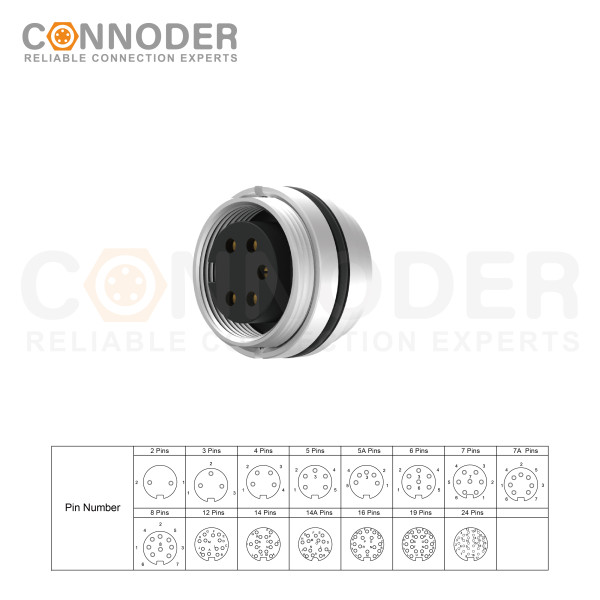
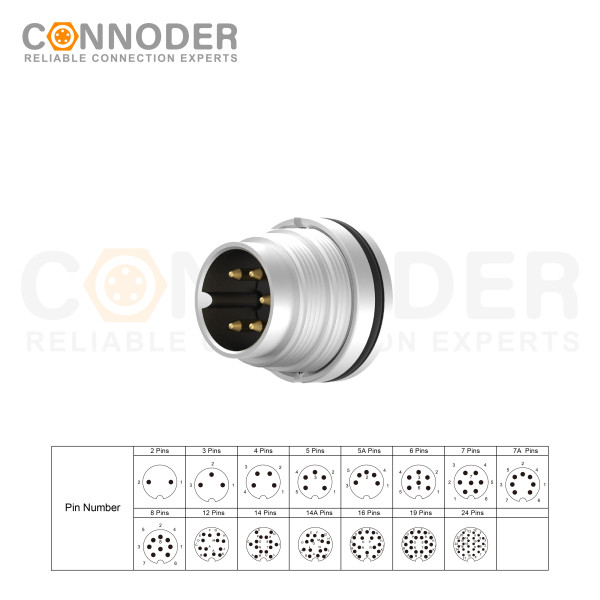
Wholesale M16 6 Pin Circular Connector | Rear Panel Mounted Welded Type Connector Ip67 Waterproof, Industrial Automation Signal Connector
M16 6 Pin Circular Connector A-Code Interface, Waterproof Connector Receptacle Cable, Straight, Front-Locking, Unshielded
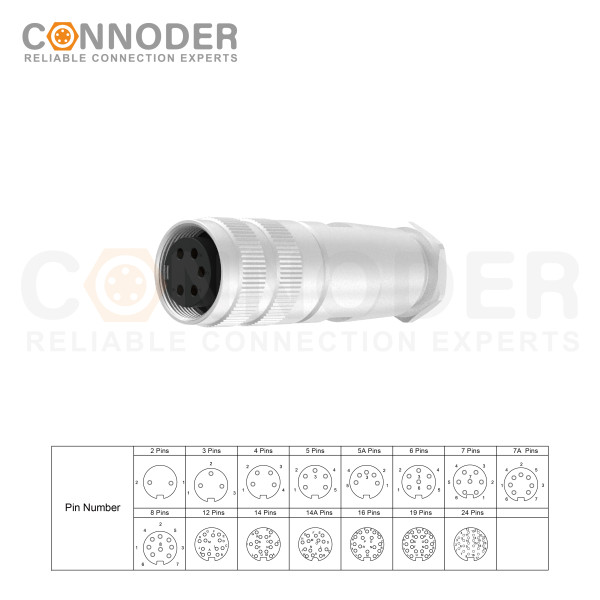
Wholesale M16 Female 6 Pin Circular Connector |  Waterproof Straight Solder Cable Front Fastened Industrial Automation Connector(M18*0.75)
M16 6 Pin Circular Connector assemblies are ideal for demanding industrial applications such as industrial automation and aerospace, marine, and telecom systems.
Wholesale M16 Female 6 Pin Straight Female Solder Circular Connector | Assembled Metal Housing C091 Plug Waterproof Connector
M16 6 Pin Circular Connector are ideal for demanding industrial applications such as industrial automation and aerospace, marine, and telecom systems. M16 Circular Connector are available in quick-lock wiring assembly types with IP67 protection and a vibration-resistant screw design.
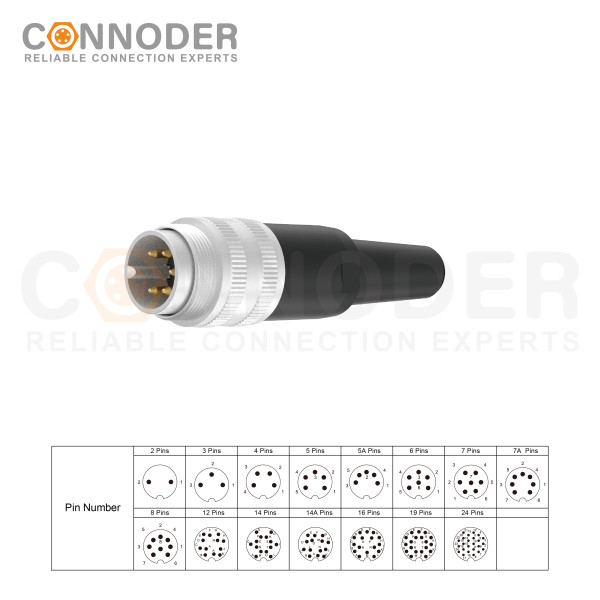
Wholesale M16 Male 5 Pin Circular Connector |  waterproof IP65 Straight Metal Plastic Solder Assembly plug 2 3 4 5 6 7 8 12 14 16 19 24Pin with Plastic Tube
M16 6 Pin Circular Connector are ideal for demanding industrial applications such as industrial automation and aerospace, marine, and telecom systems. M16 Sensor connector are available in quick-lock wiring assembly types with IP67 protection and a vibration-resistant screw design.